
Backflow rules by municipality, and notes from our jobs
Each guide and municipality page is dated and cites its official source.
Backflow rules by municipality
- TorontoCity of Toronto, Municipal Code Chapter 851
- ScarboroughCity of Toronto, Municipal Code Chapter 851
- MississaugaRegion of Peel, By-law 10-2017
- BramptonRegion of Peel, By-law 10-2017
- OakvilleHalton Region, By-law 71-19
- BurlingtonHalton Region, By-law 71-19
- MarkhamCity of Markham, By-law 2012-27
- Richmond HillCity of Richmond Hill, By-law 125-14
- VaughanCity of Vaughan, By-law 177-2020
- AuroraTown of Aurora, By-law 6213-19
- OshawaRegion of Durham, By-law 24-2018
- PickeringRegion of Durham, By-law 24-2018
- WhitbyRegion of Durham, By-law 24-2018
- HamiltonCity of Hamilton, By-law 10-103
- Peel RegionBackflow Prevention By-law 10-2017
- Halton RegionDrinking Water System By-law 71-19
- York RegionEach municipality runs its own program; Aurora 6213-19 · Markham 2012-27 · Richmond Hill 125-14 · Vaughan 177-2020
- Durham RegionBackflow Prevention By-law 24-2018
Guides
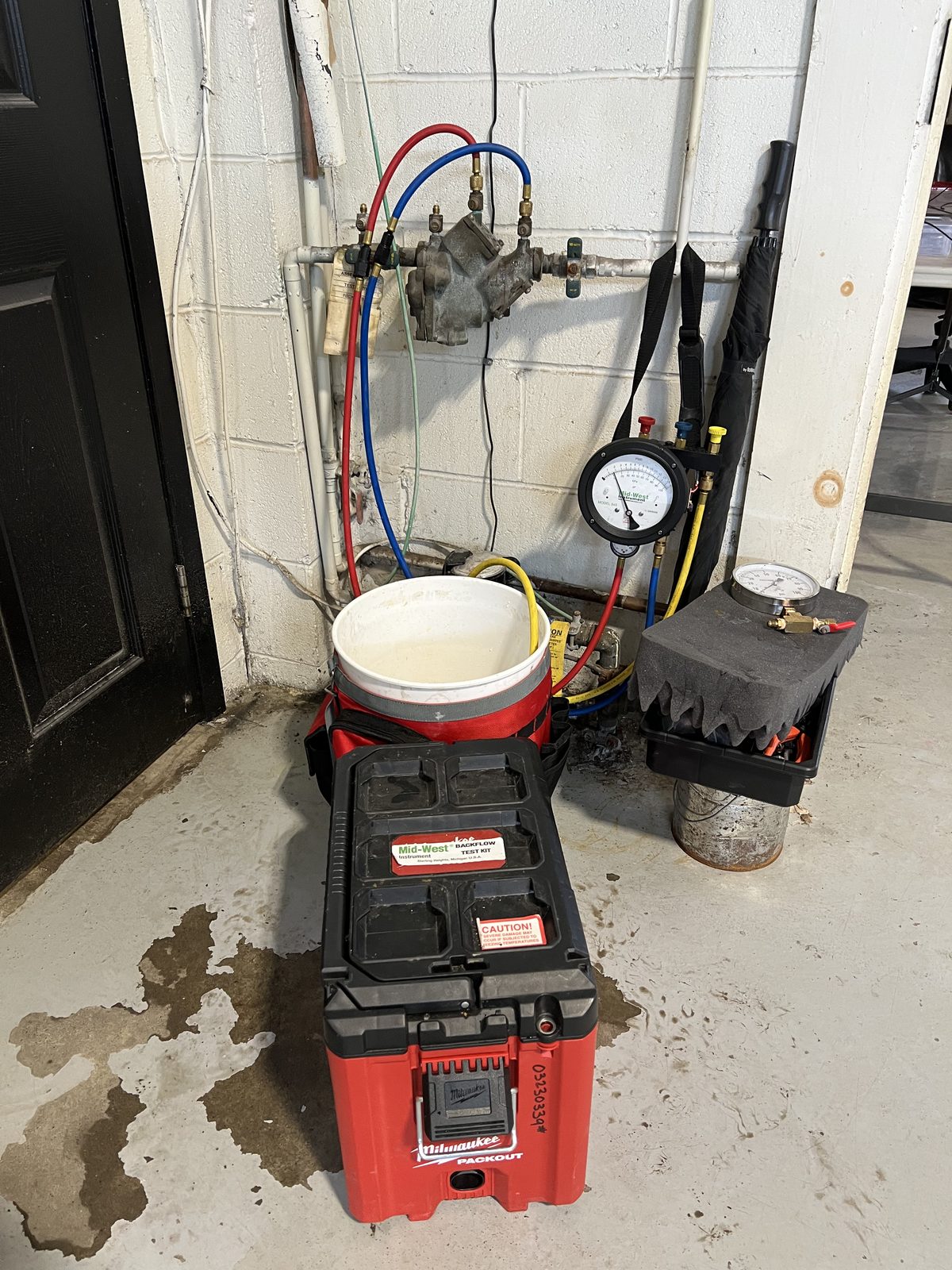
Region of Durham backflow prevention program (By-law 24-2018)
Durham's By-law 24-2018: yearly tests of industrial, commercial, institutional and multi-residential backflow preventers, and surveys within 90 days.
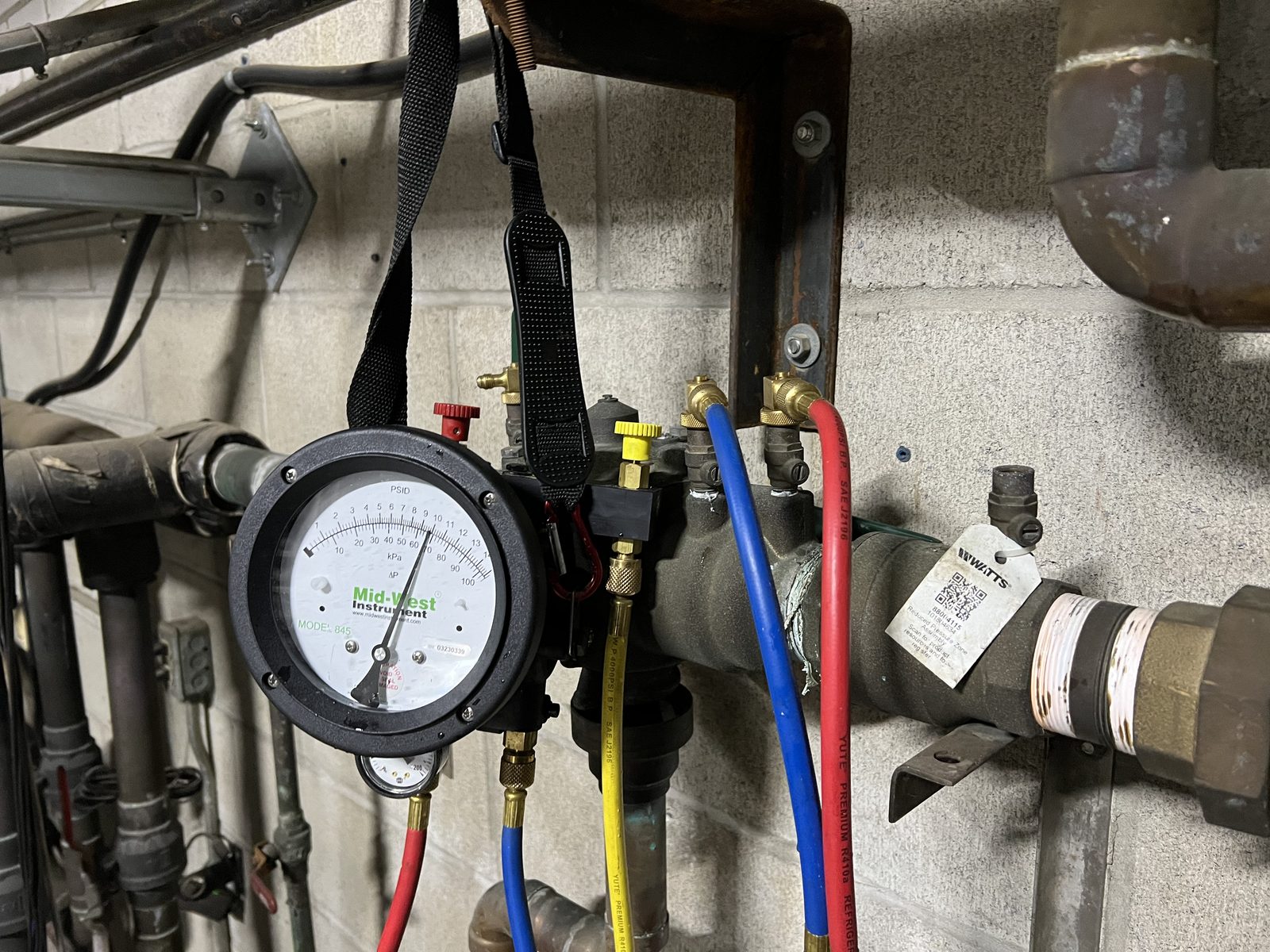
York Region backflow programs: Aurora, Markham, Richmond Hill and Vaughan
Aurora, Markham, Richmond Hill and Vaughan each enforce their own backflow by-law, with different fees. York Region supplies the water.
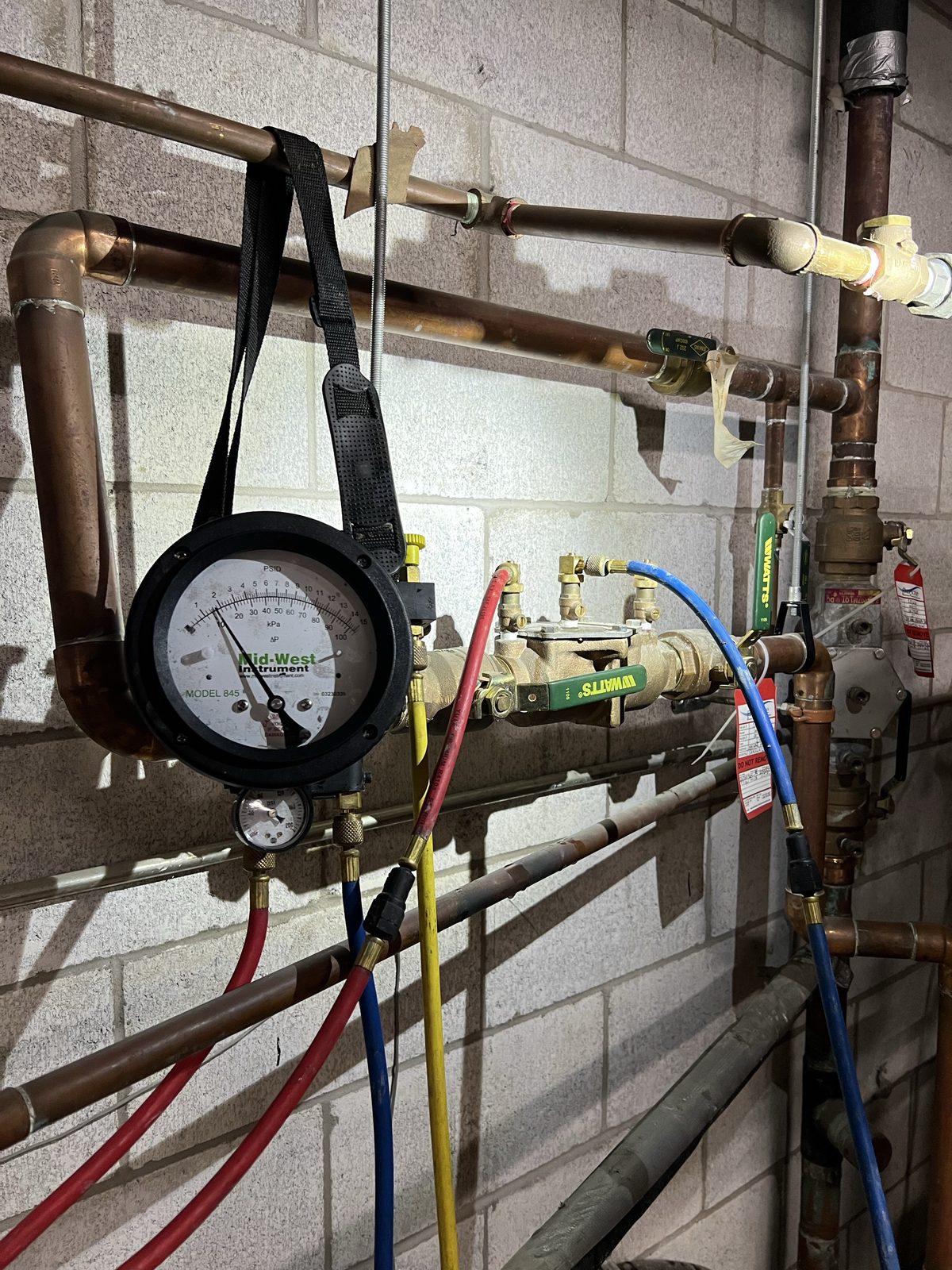
Halton Region cross-connection control program (By-law 71-19)
Halton's By-law 71-19: industrial, commercial, institutional and multi-unit owners install a backflow preventer, test it yearly and report within 28 days.
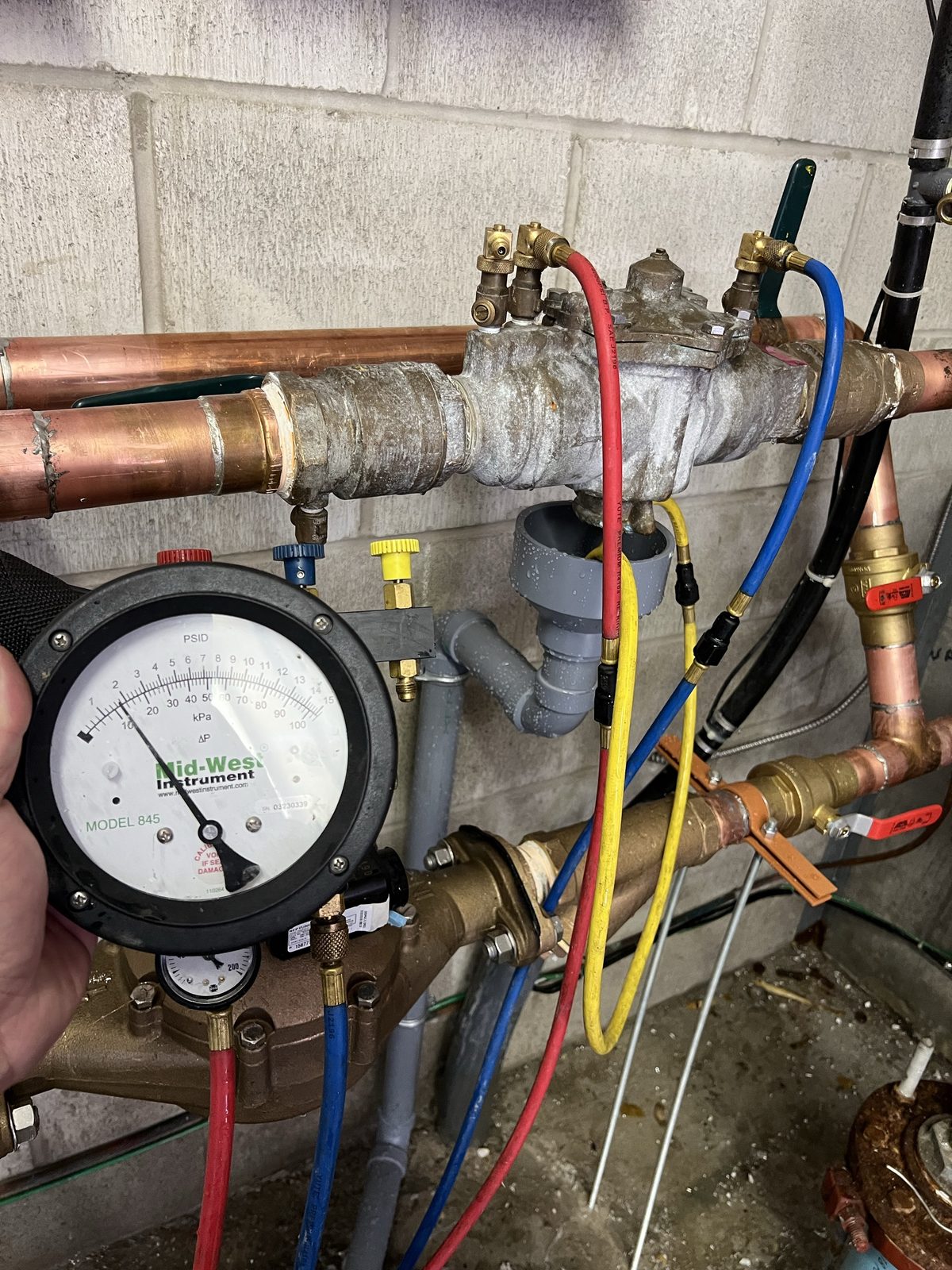
Region of Peel backflow prevention program (By-law 10-2017)
Peel's By-law 10-2017: a survey within 60 days, devices within a year, tests filed within 14 days, and a Certificate of Compliance in years without a survey.
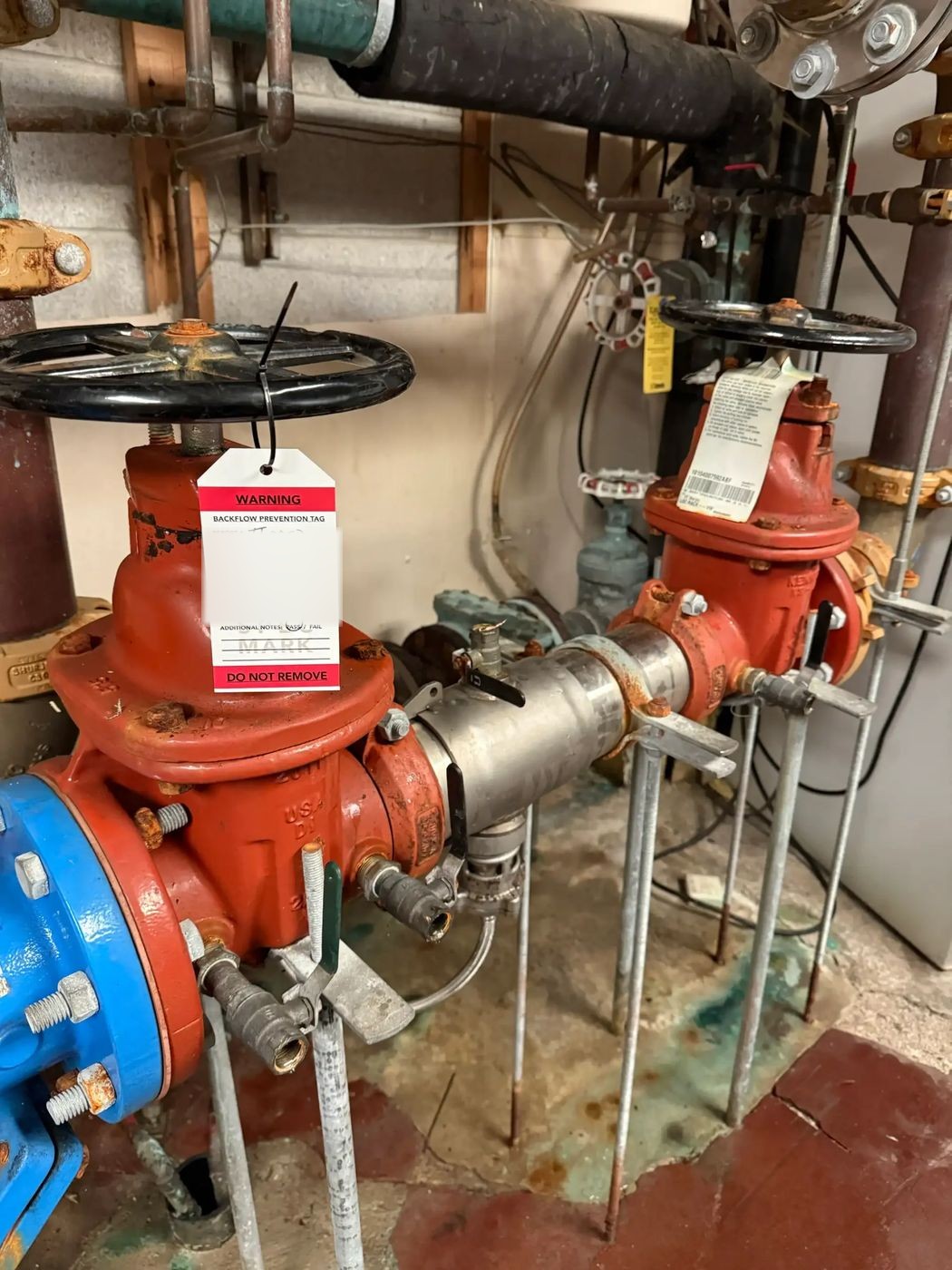
What a backflow Notice to Comply requires, and what to do first
A municipal backflow notice asks for a survey, an installation, a test or a repair by a stated deadline. How to read the notice and what to do first.
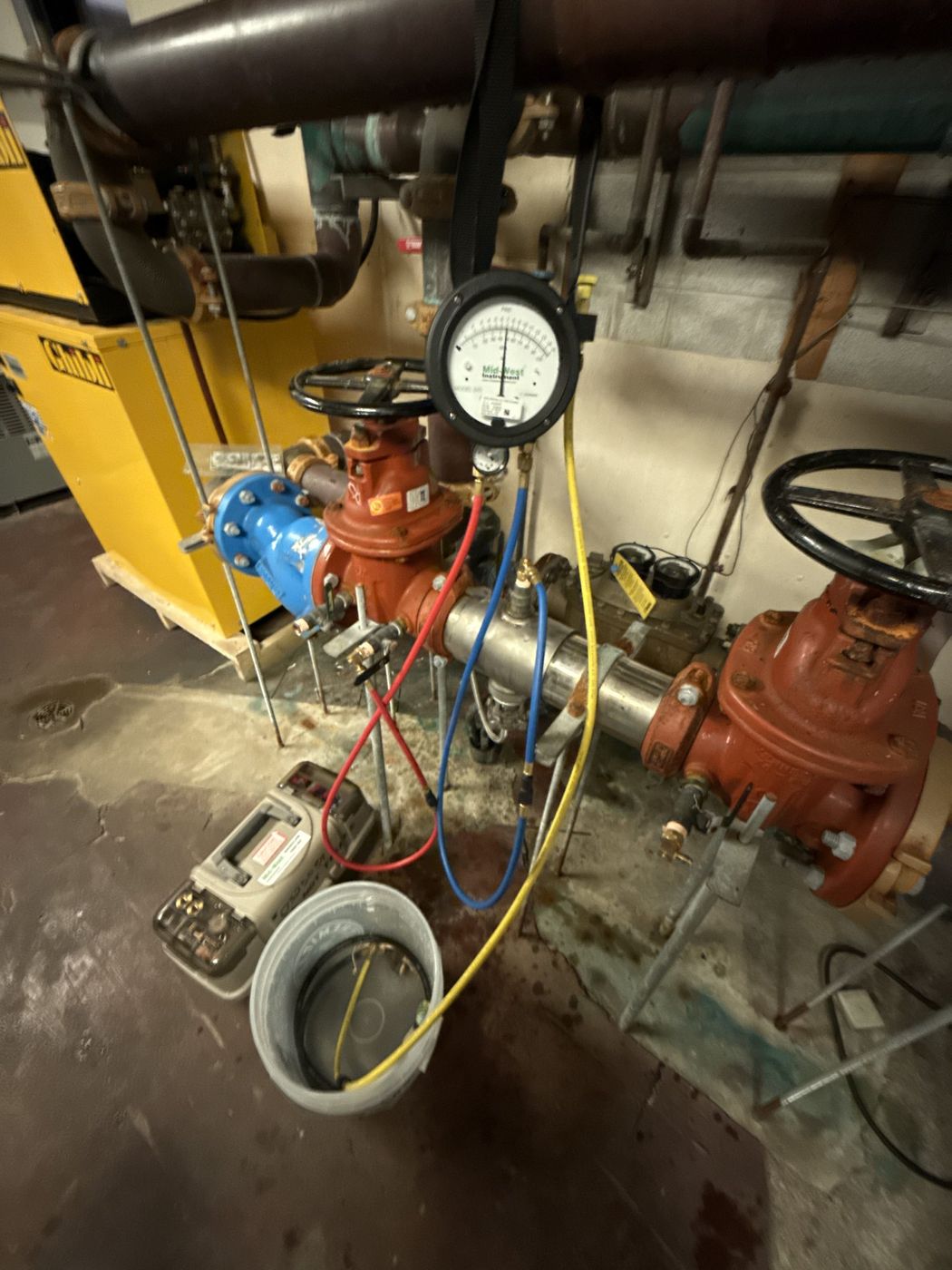
Backflow device types: RP, DCVA, PVB and detector assemblies explained
Reduced-pressure assemblies, double check valve assemblies, pressure vacuum breakers and detector assemblies: which hazard each one protects against.
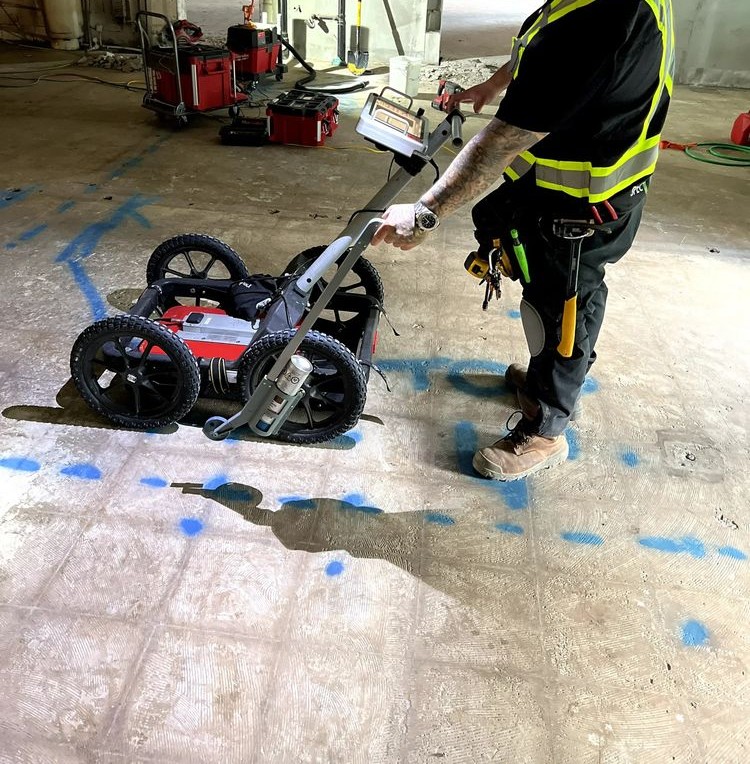
GPR scanning before we cut or dig for a backflow installation
Before coring a slab or excavating for a backflow installation, we scan with ground-penetrating radar to locate buried pipes, conduits and rebar.
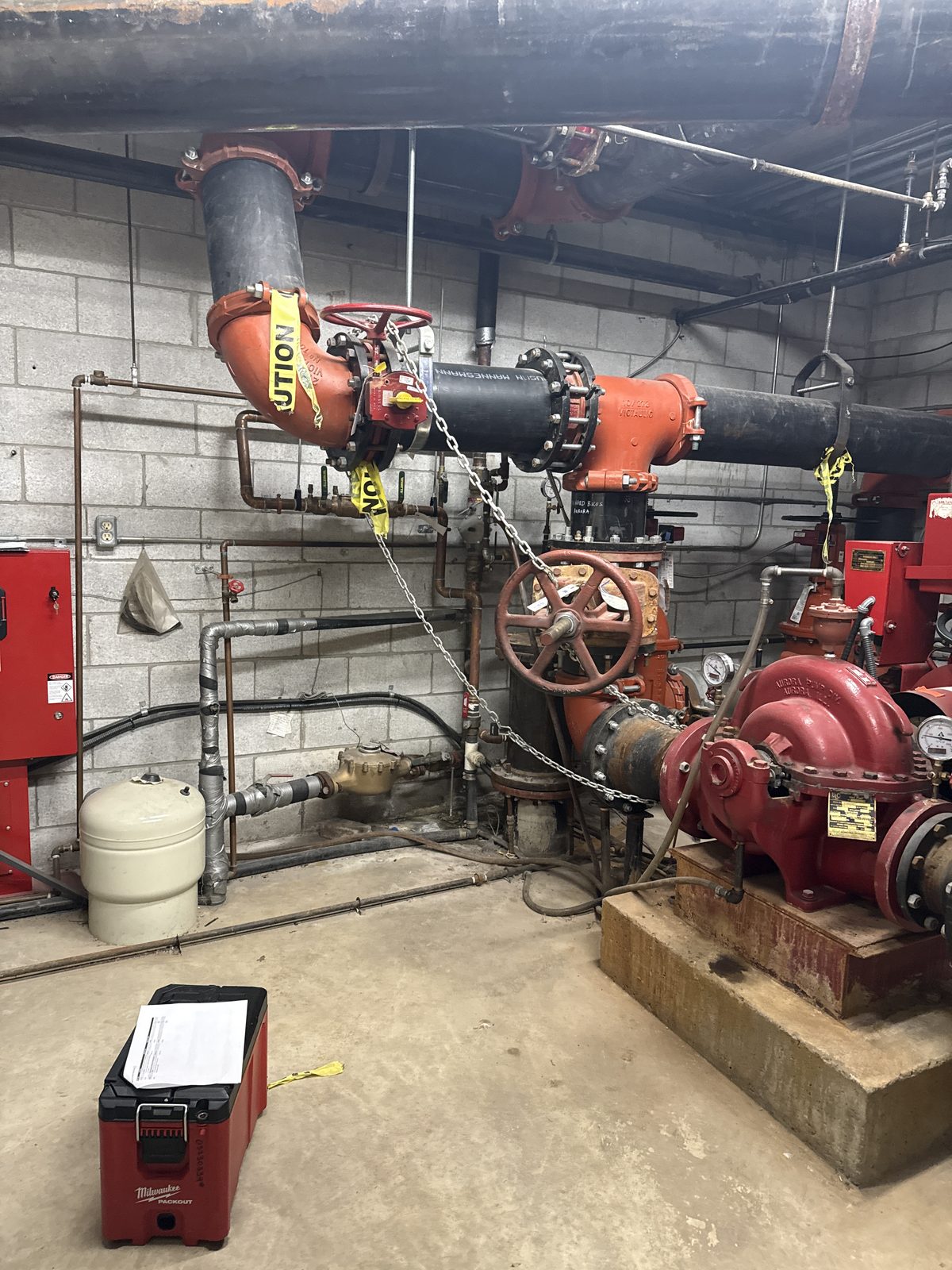
Cross-connection surveys explained: what they are and how they differ from a test
A cross-connection survey inspects a property's water system to identify hazards and the protection each one needs. It is not a backflow test.
What happens during a backflow test, and how often it is required
A backflow test is a short site visit: a certified tester connects a calibrated test kit to each assembly, checks the valves, tags it and files the report.
Field notes
One job per note: what we found and what we did.
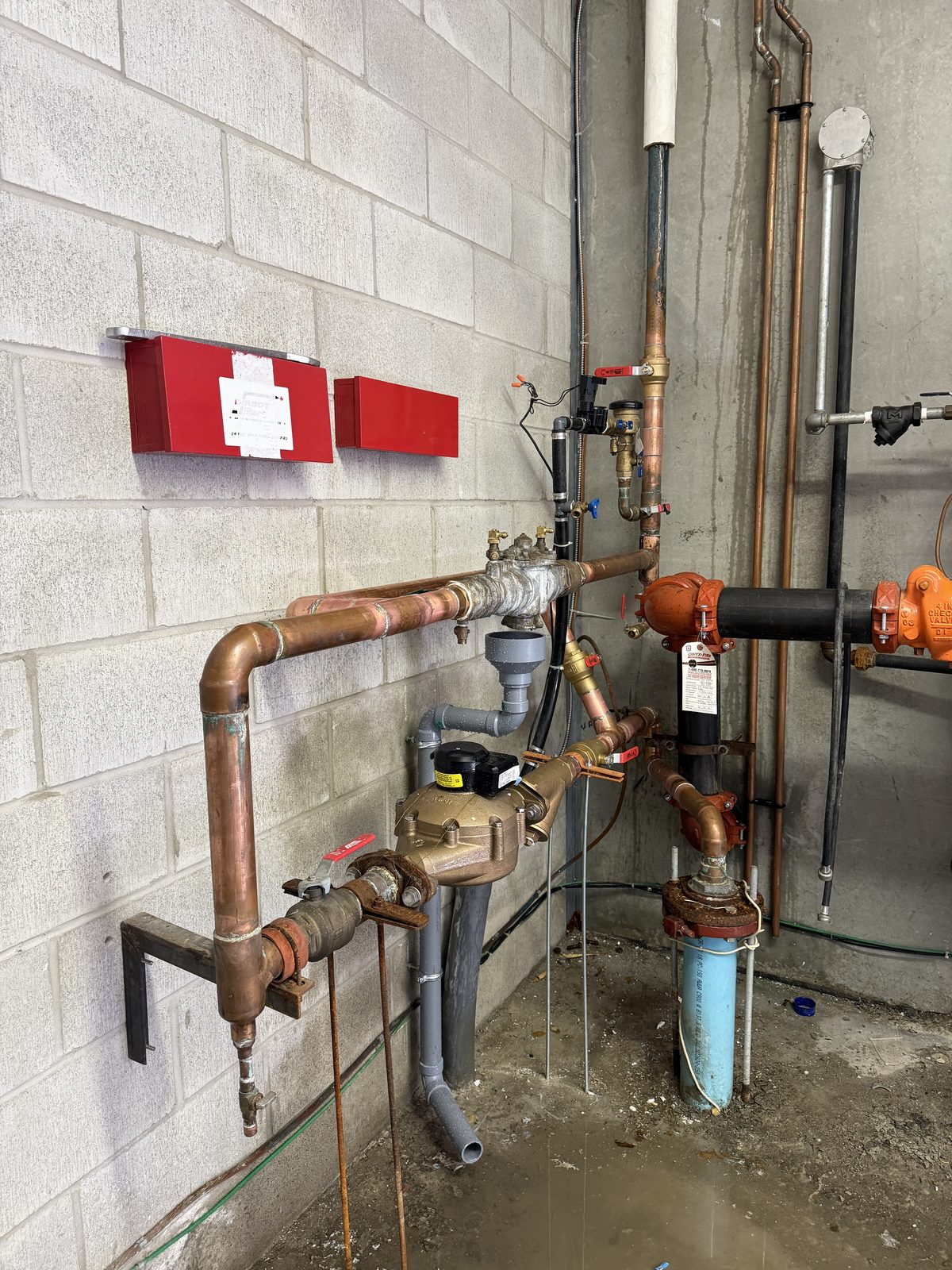
Relocating a meter bypass and re-piping a water service entry
A water service entry re-piped in copper: the meter bypass relocated, the backflow preventer and strainer reset on the new line, then insulated.
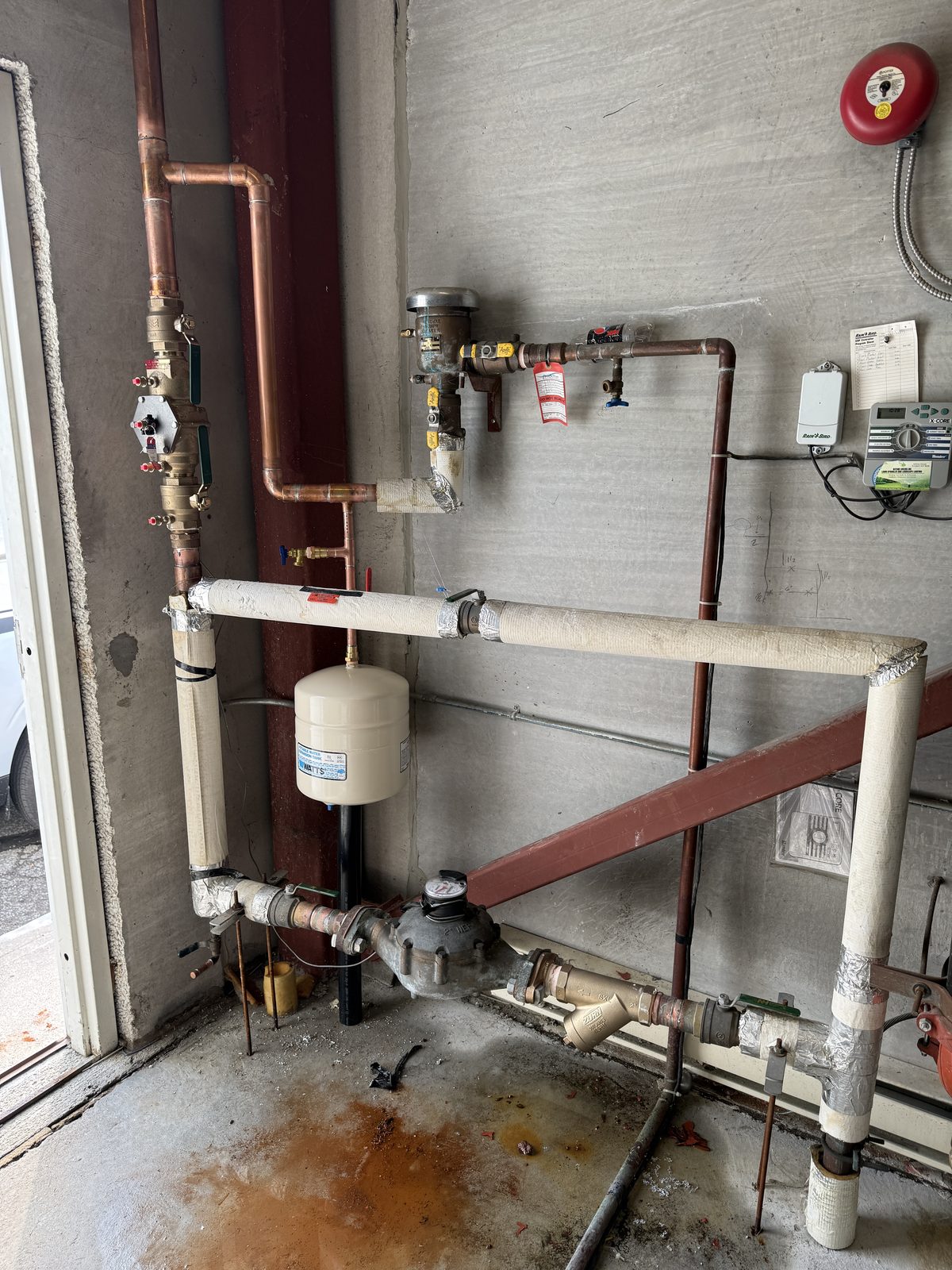
A new 2-inch DCVA on a vertical riser, with an expansion tank
A 2-inch double check valve assembly installed on a vertical riser after the meter, with a thermal expansion tank added for the closed system.
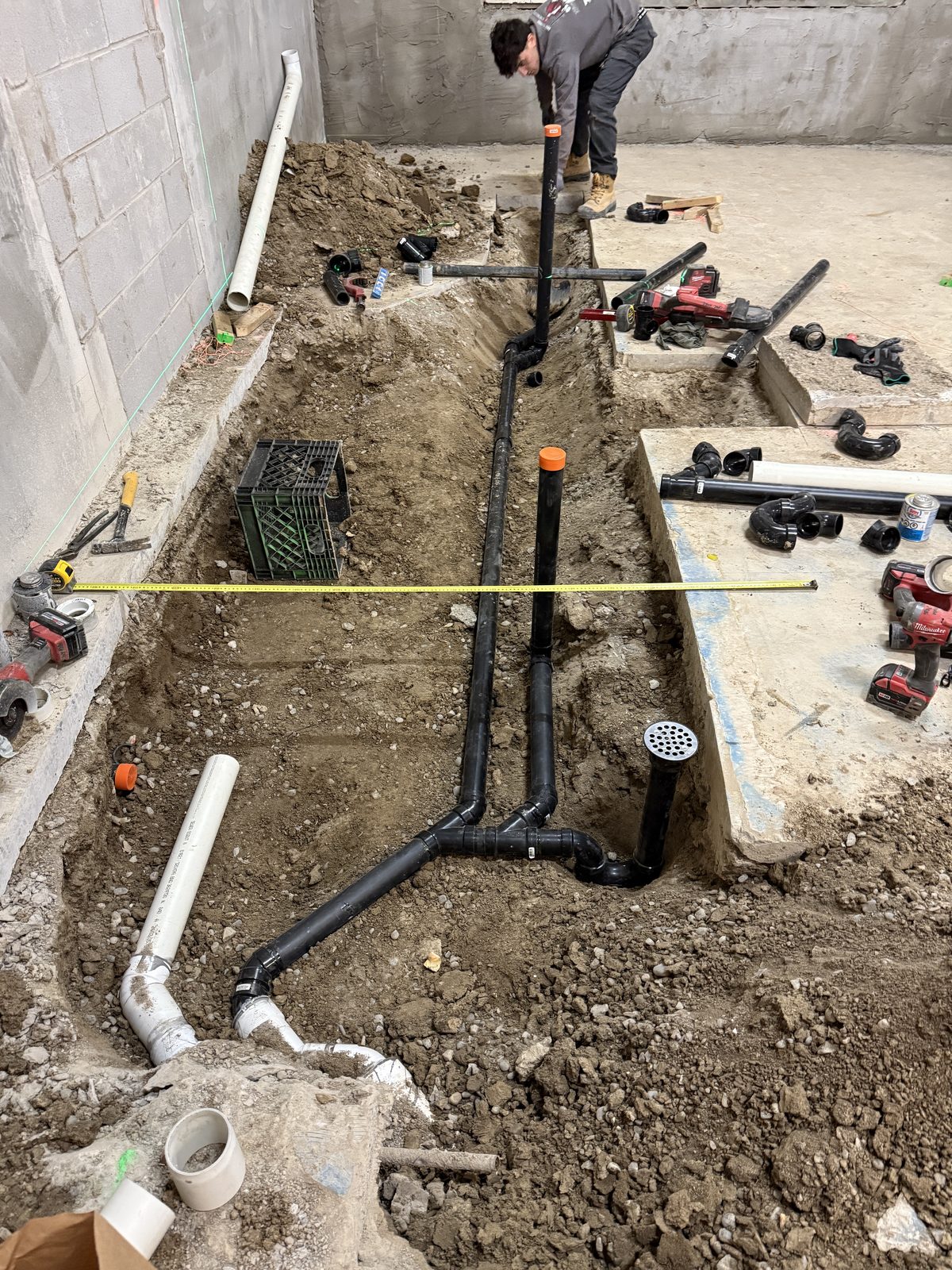
Plumbing a warehouse unit: underground rough-in to overhead lines
Ten weeks of plumbing in an empty industrial unit: slab cut and trenched, drainage laid, floor drain set, slab poured back and overhead lines run.
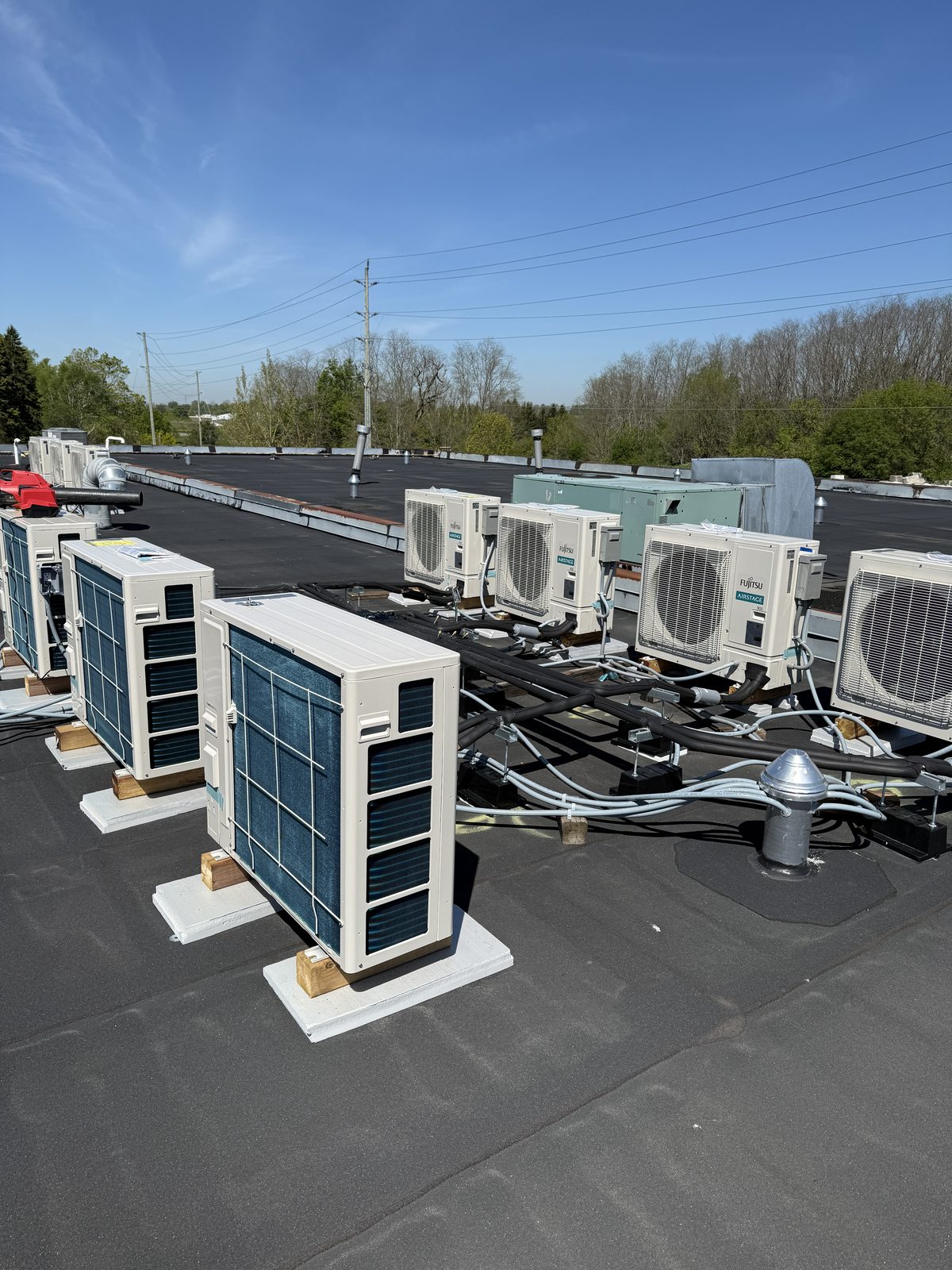
Fourteen rooftop heat pumps, from delivery to the finished rows
Fourteen rooftop heat pump condensing units on one flat roof: delivered, set on stands, piped with insulated line sets, and the rows completed.
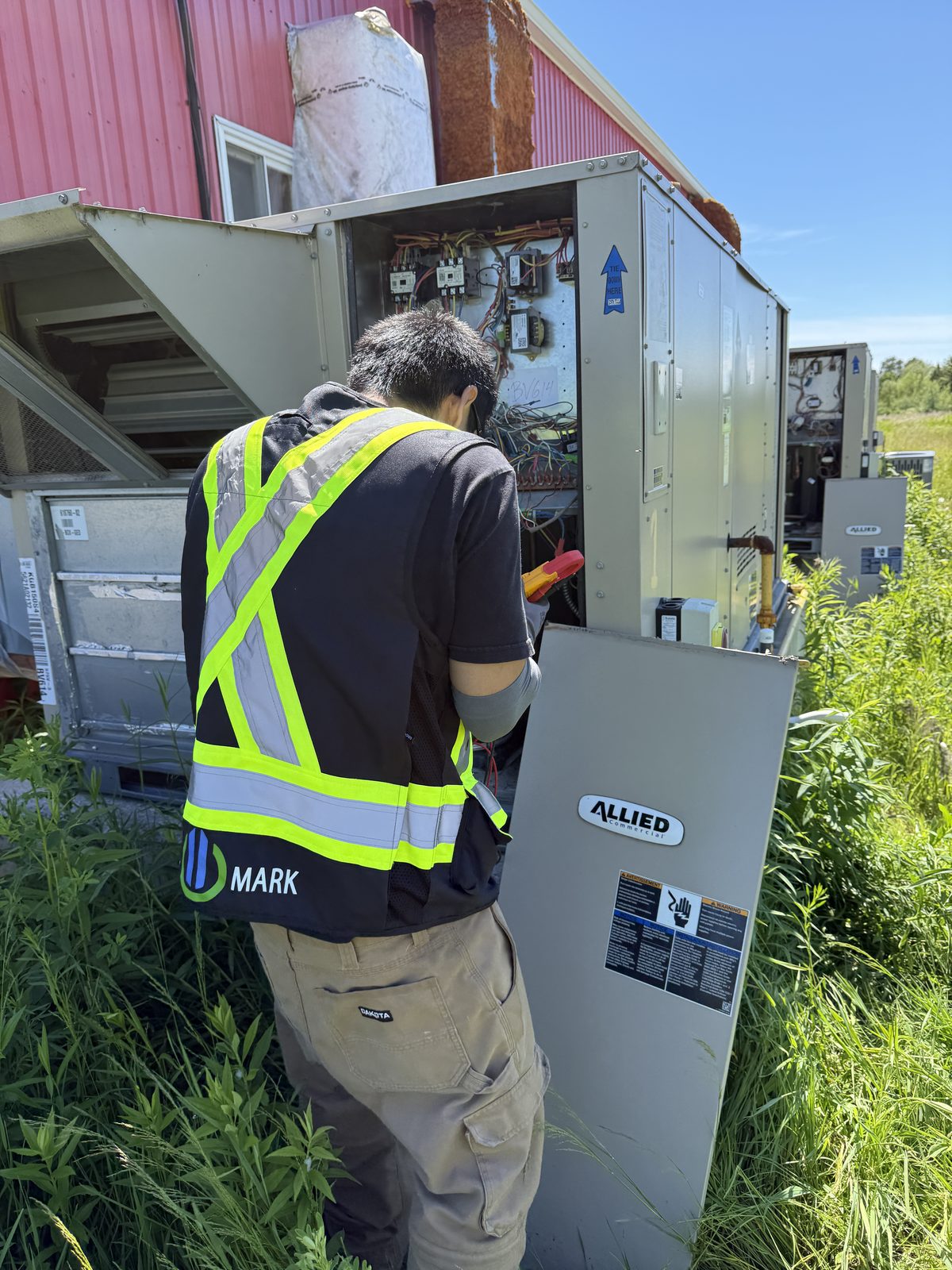
Rooftop unit preventative maintenance, and a diagnostic at the control panel
A preventative-maintenance visit on packaged rooftop units, with the refrigeration and electrical checks and a diagnostic on one unit's control circuit.
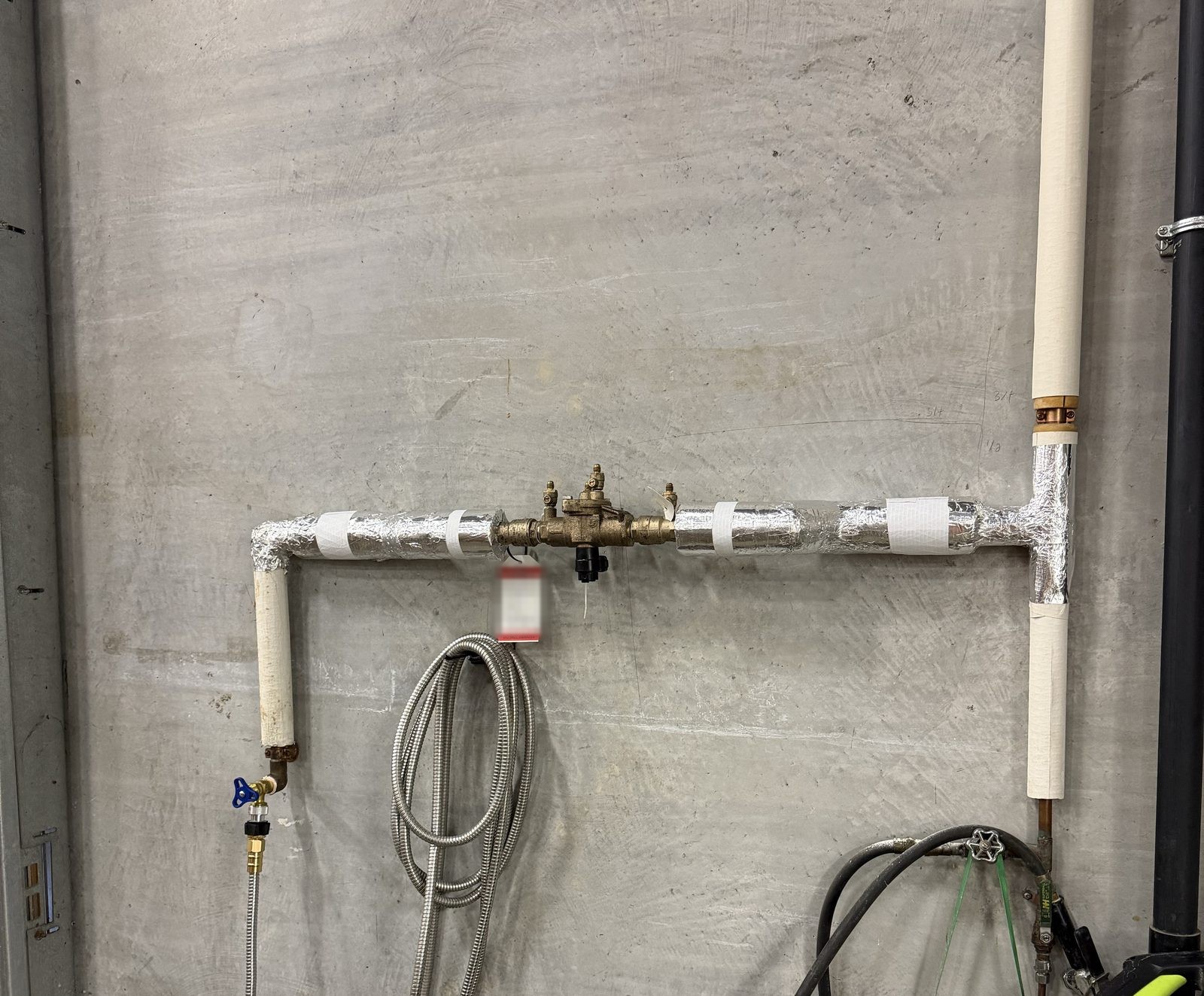
Why a pressure-wash station needs an RPZ
A pressure washer on a building's water supply is a cross-connection. Where it draws a chemical dangerous to health, the connection gets an RPZ.
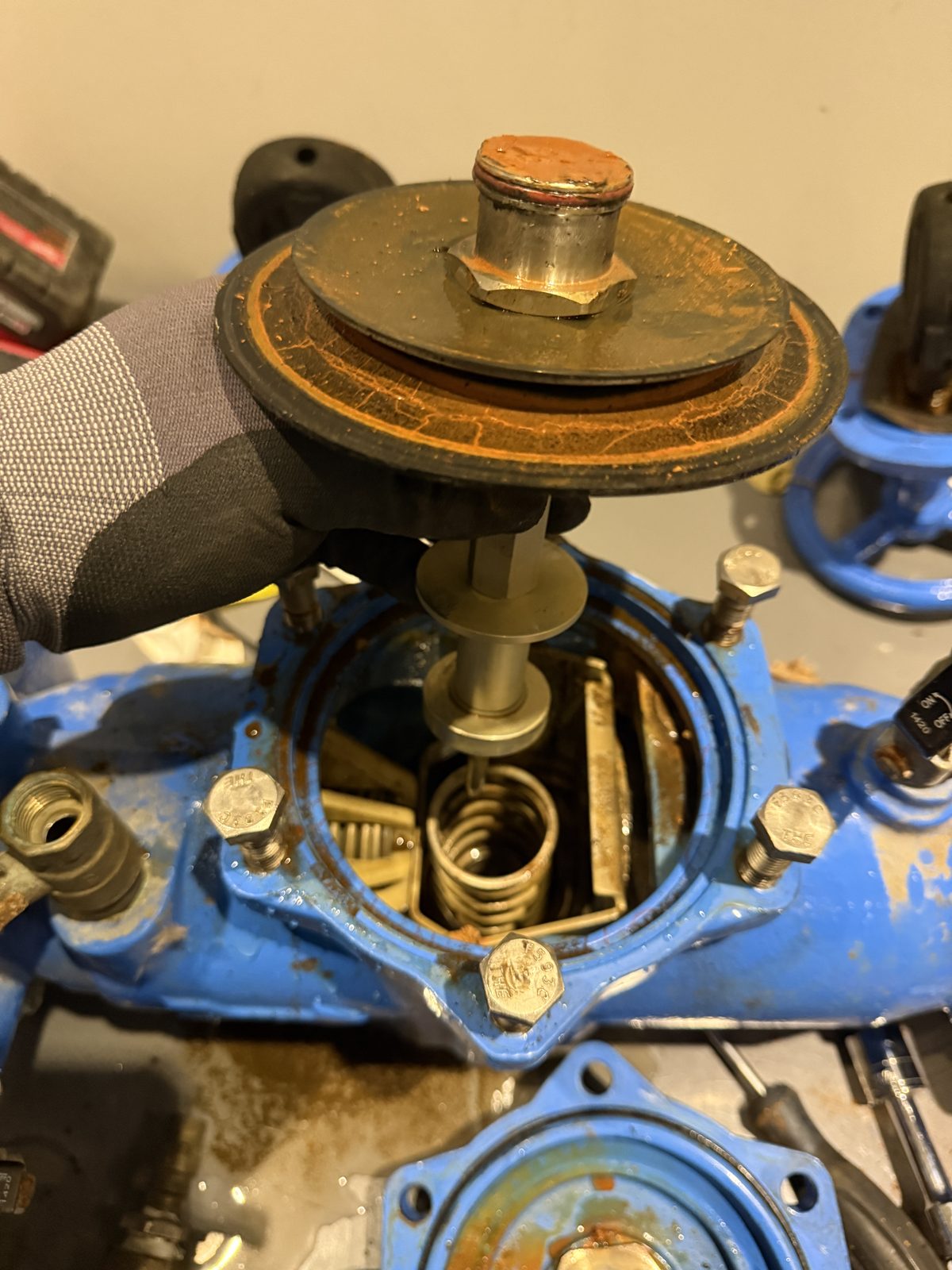
Relief valve failure on a Watts LF009 RPZ: diagnosis and repair
A Watts LF009 reduced-pressure assembly with a failed relief valve: the diagnostic visit, the rebuild, and why relief valves discharge.
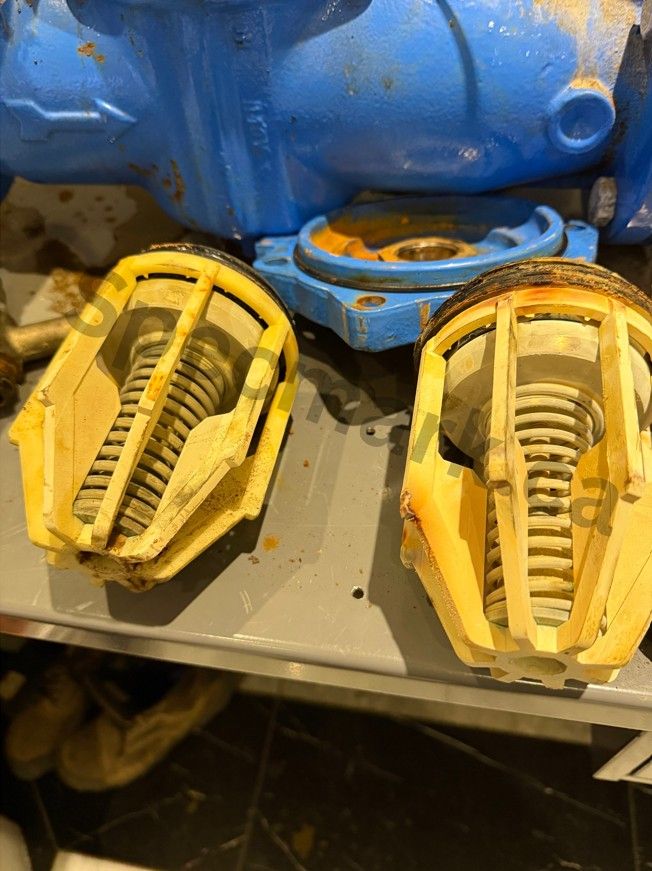
Why an RPZ fails its annual test: debris on the check valves
Why an RPZ fails its annual test: rust and grit on the check valve seats. The fix was a clean-out and a rubber kit, then a retest.
Annual test on a 4-inch RPZ at a food-processing facility
An annual test on a 4-inch reduced-pressure assembly at a food-processing plant: both checks and the relief valve held, and the tag and report were done.
Cannot find your municipality or your question?
Send us the notice you received. We tell you what it requires.