
Backflow preventionCity of Toronto, Municipal Code Chapter 851
Backflow preventer testing and installation in Toronto
Spec-Mark Group surveys properties and tests, installs and repairs backflow preventers for industrial, commercial, institutional and multi-residential properties in Toronto. The City enforces its Water Supply By-law, Municipal Code Chapter 851. Toronto Building issues the permit for a new device. Our testers file through the City's online reporting system. Our office is in Scarborough.
Who has to comply in Toronto
The City's Water Supply By-law requires a backflow preventer on the water supply of industrial, commercial and institutional properties and large residential buildings (Part 3 of the Building Code). The full list of sectors, with the hazard level assigned to each, is in Schedule 5 of the by-law. Construction sites are covered separately: water drawn through a temporary meter or a hydrant permit must pass through a tested device. The hazard level decides which type of device the property needs. If you are unsure which device applies, call Toronto Water at 416-394-8888.
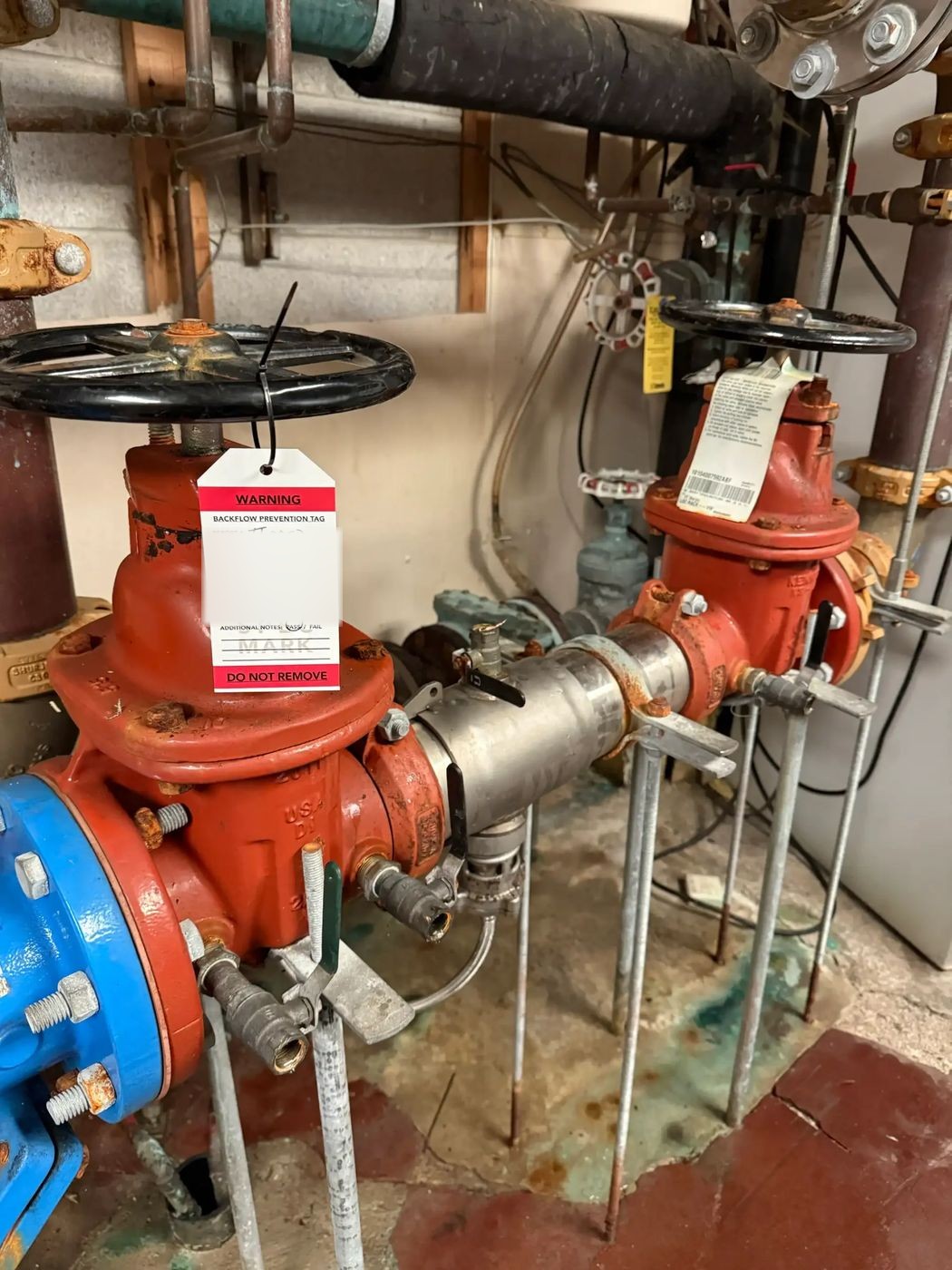
The device isolates the building from the municipal system. If the pressure in the main drops, or the pressure in the building rises above it, water in the building cannot flow back into the City's main.
The Ontario Building Code's plumbing part (Part 7) and the CSA B64 standards also apply. The municipal by-law adds the program around them: who is surveyed, how often each device is tested, where the report goes and by when.
What the City requires from you
- A survey, when requested. Some owners receive a letter asking them to complete a cross-connection survey so the City can confirm the property has adequate protection. Only certain professionals can carry it out (Schedule 6 lists the criteria). The survey covers premise isolation only. It is signed by the surveyor and the owner. It is due by the date in the letter, or within 30 days if the letter gives none. It must be updated at least every 5 years, or within 30 days of any increase in hazard level.
- A permit, and the device right after the meter. A plumbing permit is required for every new installation and replacement. Devices go on the water supply line immediately after the meter, with no branch or hose connection between the meter or its by-pass and the device.
- Testing at installation, after repairs and every year. Each device must be tested at the time of installation, within 72 hours after it has been cleaned, repaired, replaced, serviced or overhauled, and at least once a year.
- A report within 7 days, and repairs within 48 hours. The test report must reach the City within 7 days of the test. If a test shows the device is not in proper working condition, the owner has 48 hours to repair or replace it.
- A qualified tester and an online report. Testing can be done by plumbers, engineers and fire-sprinkler fitters who hold a cross-connection control certificate. An OWWA certificate must be issued within the last 5 years, an ASSE certificate within the last 3. Results are reported through the City's online test report form. The tester and the client both receive a confirmation email with the result.
- A test tag on the device, and records on site. Every device must carry a tag that records its test history. Copies of the records submitted to the City must be kept on the property for 7 years.
A permit for a new device in Toronto
Section 851-8D(10)(a) requires a permit for each device installed or replaced, and no work may start until Toronto Building has issued it. Toronto Building issues it as a stand-alone plumbing permit, applied for through its online application tool; the 2026 fee is $92.79 per device, with a $214.79 minimum per permit. The drawings follow the City's standard OMPAC drawings for devices up to 2 inches. Those drawings also show how to handle thermal expansion, because a backflow preventer turns the building's plumbing into a closed system.
The device goes immediately after the water meter and bypass piping, with no branch or hose connection before it. A reduced-pressure assembly (RP, also called an RPZ) may not be installed below grade. The work must be done by a plumber licensed with the City, and we apply for the permit on the owner's behalf.
What we do for Toronto properties
Our backflow testers hold ASSE certification and file through the City's online system.
- Test each assembly with a calibrated test kit and attach or update the tag during the visit.
- File the report through the City's online form as the City requires, and send you the confirmation.
- If a device fails, give you a repair scope (the City requires the repair within 48 hours of the test).
- Retest a repaired device (the City allows 72 hours after the repair).
- Complete the cross-connection survey and the Survey Report when the City requests one.
- Apply for the plumbing permit and carry out the first test on a new installation.
The certificates are listed on the Qualifications page.
Across the City
The same rules apply in Scarborough, North York, Etobicoke, York, East York and downtown. Office towers are in the program as commercial buildings, hotels under their own sector, and the larger residential buildings as Part 3 buildings. Our office is on Melford Drive in Scarborough, and the Scarborough page has the local detail.
Questions about backflow in Toronto
Is a backflow preventer required for my property in Toronto?
Yes, if the property is industrial, commercial or institutional, or a residential building under Part 3 of the Building Code. In general terms that means four storeys or more, or over 600 square metres. Schedule 5 assigns a hazard level to your sector, and the hazard level sets the device; construction sites drawing water through a temporary meter or hydrant permit are covered too. A house within Part 9 is outside the program unless it has an auxiliary water supply or another law requires premise isolation.
How often is a backflow preventer tested in Toronto, and when is it replaced?
At installation, within 72 hours of any cleaning, repair, replacement or servicing, and at least once a year. The by-law sets no replacement age; a device that fails its test is repaired or replaced within 48 hours, and in our experience most failures are repairs.
What does backflow compliance cost in Toronto?
The City charges $68.50 to process each annual test report under its 2026 fee schedule. The amount is set in the City's fee by-law and changes with it. Toronto Building charges $92.79 per device for the plumbing permit a new device needs, with a $214.79 minimum per permit. We quote from the notice and the number, size and type of devices.
Is a backwater valve the same as a backflow preventer?
No. A backwater valve is a sewer device that helps protect a basement from sewage backup. A backflow preventer protects the drinking water supply, and it is what Toronto Water's notice is about.
Who sends the notice in Toronto, and who issues the permit?
Survey requests come as a letter from Toronto Water's Backflow Prevention Program. The plumbing permit for a new or replaced device comes from Toronto Building, and test reports go back to Toronto Water through its online form.
Also under this program: Scarborough.
Sources
- City of Toronto, Backflow Prevention Program
- Toronto Municipal Code, Chapter 851, Water Supply (PDF, consolidated April 1, 2019)
- City of Toronto, Water rates and fees (2026)
- City of Toronto, Backflow Prevention Device Permit (Toronto Building, September 8, 2026)
- City of Toronto, Building Permit Fees (June 19, 2026)