
Field note
Relief valve failure on a Watts LF009 RPZ: diagnosis and repair
A Watts LF009 reduced-pressure assembly (RPZ) had a failed relief valve. The diagnostic visit in October found the fault. On the repair visit in November the relief valve was opened: the cover and diaphragm assembly came out and the spring and seat were exposed. Worn parts were replaced and the device was retested.
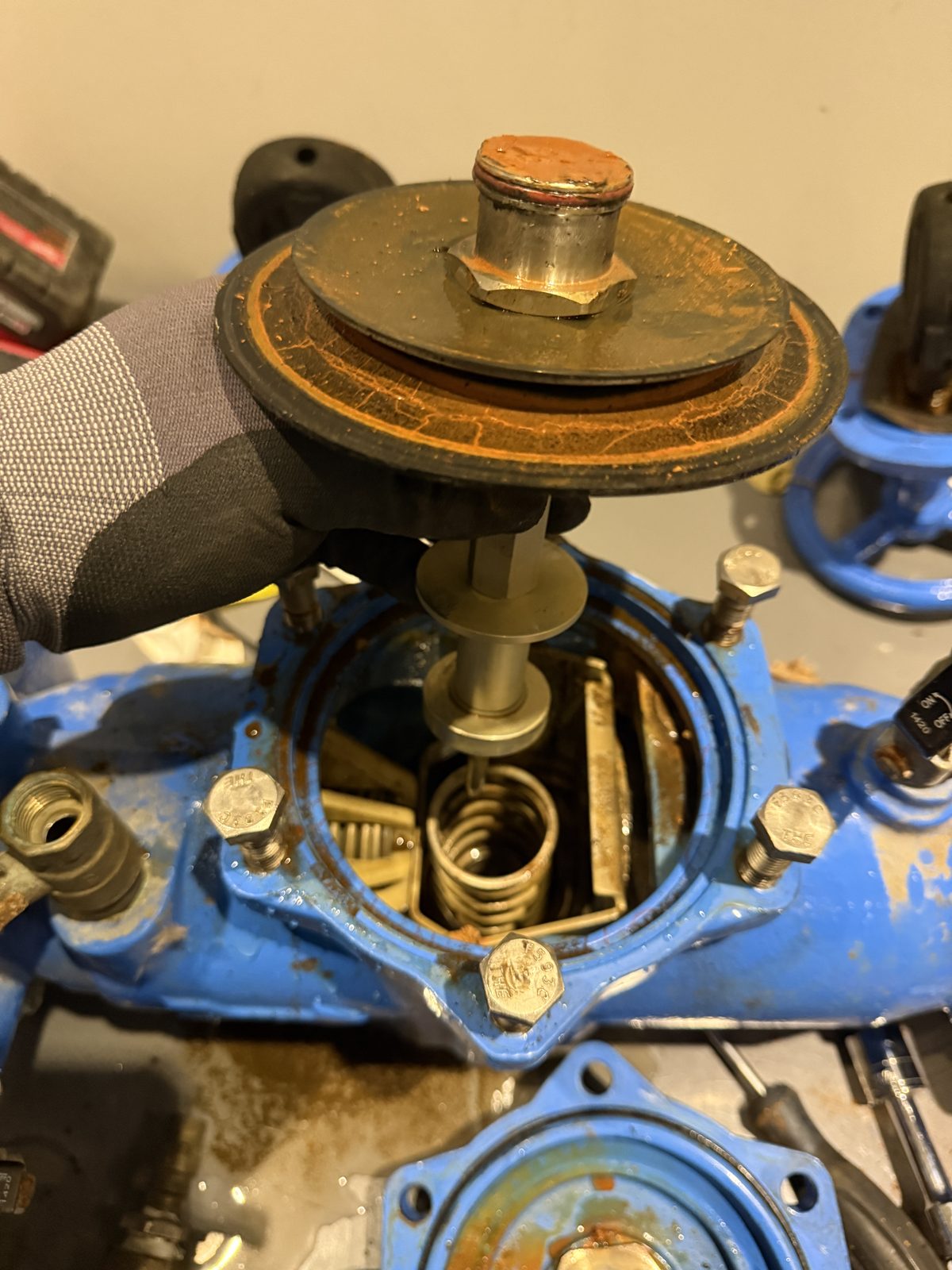
As found
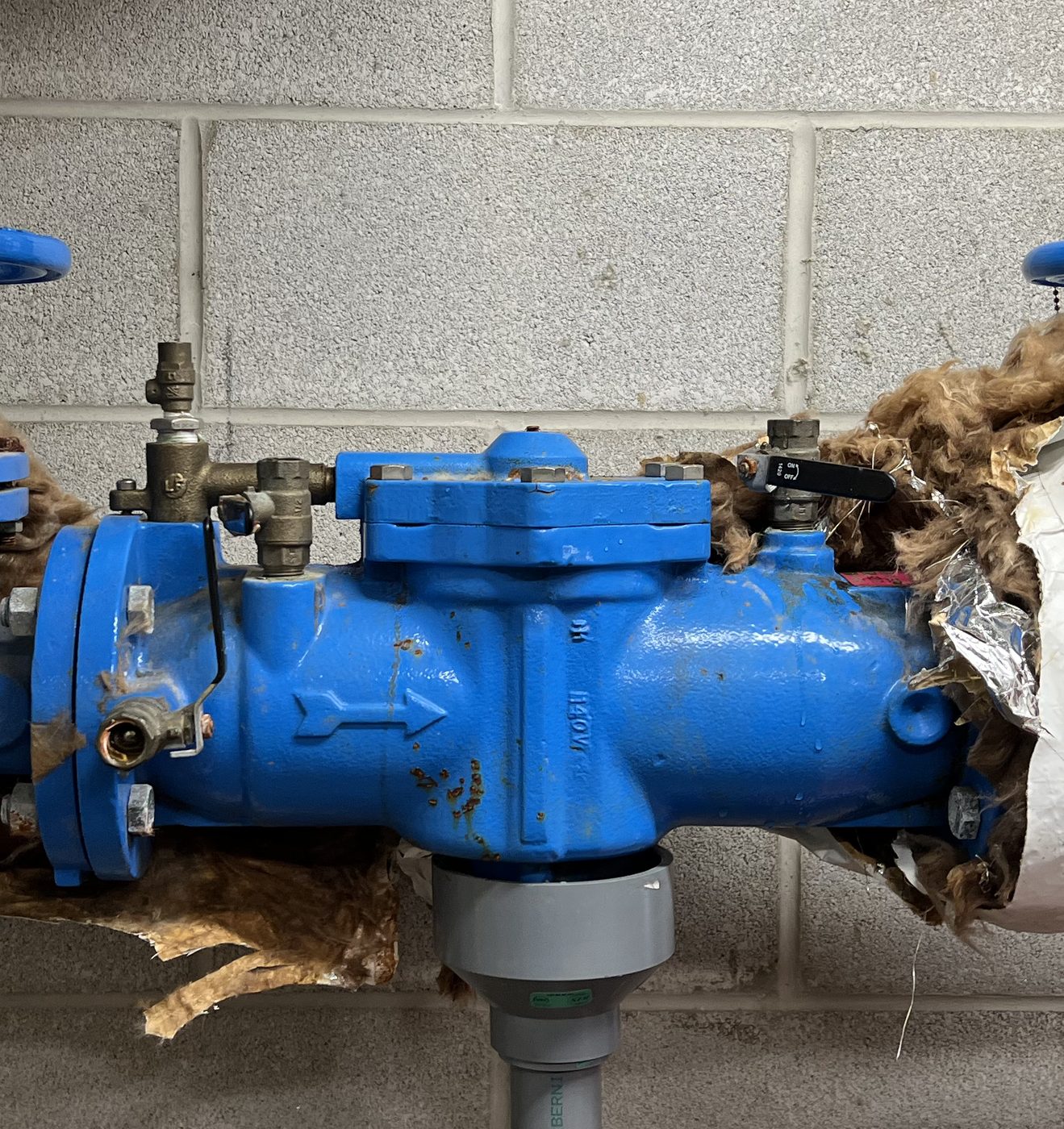
The owner reported water discharging from the relief valve. On the diagnostic visit the assembly was tested with a test kit. The test separates a relief valve fault from the more common cause of discharge, a first check that is not holding.
Why relief valves discharge
In our experience a relief valve discharges for one of these reasons:
- The first check is fouled. In our experience this is the most common cause, and Watts lists it first. Debris or wear lets pressure through to the zone between the checks, and the relief valve opens exactly as designed.
- The relief valve seat or disc is damaged. The valve discharges even though the checks hold. This is a relief valve failure.
- The diaphragm is worn or torn. The valve can no longer sense the pressure difference correctly.
- Debris is lodged in the relief valve. It cannot close fully.
- Supply pressure fluctuates. The valve discharges briefly during pressure swings on the street side, with nothing wrong in the assembly.
The differential test tells these apart. That is why the assembly is tested before any parts are ordered.
The repair
With the assembly isolated and drained, the relief valve cover comes off. The stem, spring and seat are inspected and cleaned, and worn parts are replaced. The assembly was then reassembled and retested, and the new test report was filed.
Why an RPZ needs a drain
A relief valve discharge can be a trickle or close to the full supply flow. An RPZ is installed where a tester can reach it and where the discharge can go to a drain through an air gap, never below grade in a pit. The device guide covers the placement rules.
Questions
My RPZ drips from underneath. Is that the relief valve?
Usually. The port on the underside is the relief valve. Water from it means the first check is not holding, the relief valve itself is worn, or the supply pressure is swinging. A test tells which. The discharge is not a leak to plug. Never cap or plug a relief port. Call a certified tester to find the cause.
Can the relief valve be repaired, or does the whole assembly have to go?
On most assemblies, including the LF009, the relief valve is a rebuildable module with its own repair kit. In our experience replacing the whole assembly makes sense only when repair is not practical; the debris field note lists the reasons. A damaged shut-off valve is repaired or replaced on its own, as Watts advises.