
Field note
Annual test on a 4-inch RPZ at a food-processing facility
This plant's premise isolation is a reduced-pressure assembly (RPZ), the device a severe hazard requires. This 4-inch RPZ was tested on its annual cycle. Both checks held, and the relief valve opened within the required limit. The tag and report were completed before we left. A large RPZ like this is a routine visit when it is accessible and the shutdown is planned.
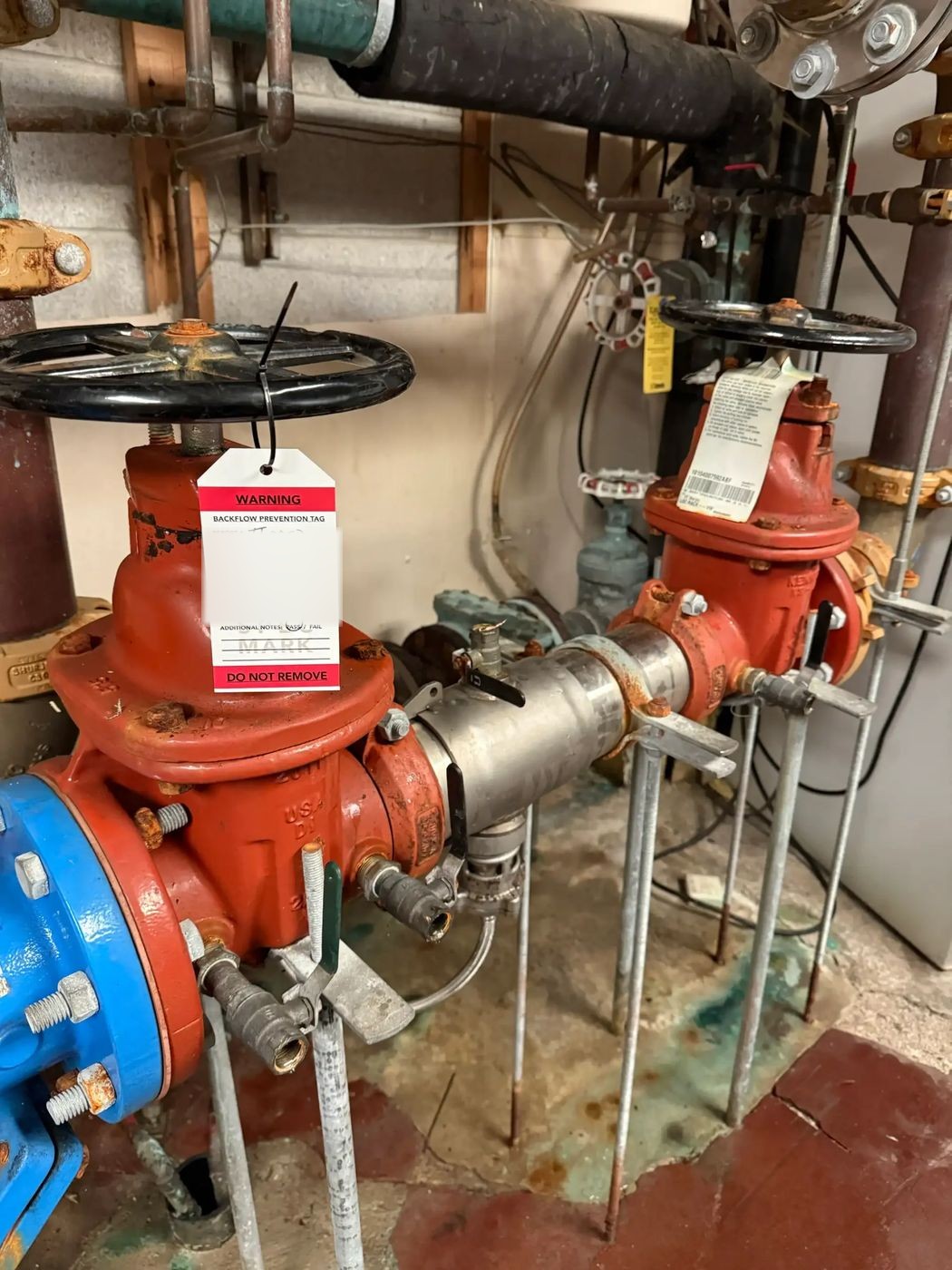
The setting
This food-processing facility takes municipal water into processes that handle product, cleaning chemicals and heat. Toronto's and Vaughan's by-laws class food processing as a severe hazard. Elsewhere in the GTA the hazard class comes from the cross-connection survey. Where the by-law or the survey classes the premises as a severe hazard, the premise isolation on the incoming service has to be an RPZ. It has to be tested at least once a year.
The visit
The assembly sits in the mechanical room with clear access on both sides. That access is the main reason the test on a large RPZ is routine. We scheduled the shutdown with the plant and closed the shut-off valve after the assembly. We connected the test kit to the test cocks and tested both checks and the relief valve opening point.
Every reading was within the CSA B64.10.1 limits. The tag went on the device with the date and result. The report was filed with the municipality, and the plant's next due date went into our schedule.
What this job shows
- An assembly you can reach from both sides, with working room around it and a drain under the relief port, is, in our experience, a short visit every year. Testing an assembly buried behind equipment, in our experience, takes a shutdown and a crew.
- A 4-inch RPZ can discharge a large volume of water if its relief valve opens in service, which is what the floor drain is sized for. On this visit the test spilled only a little water. The annual test records the pressure at which the relief valve opens, which shows whether the fail-safe was working on the day of the test.
- The tag on the device is the on-site record of each test; the full report is filed with the municipality.
Questions
Why does this food plant need an RPZ rather than a double check valve assembly (DCVA)?
Toronto's and Vaughan's by-laws class food processing as a severe hazard. Elsewhere in the GTA the hazard class comes from the cross-connection survey. A severe hazard requires an RPZ, which fails safe by discharging through its relief valve. A DCVA is permitted only for moderate and minor hazards.
How does testing a 4-inch assembly differ?
We test it the same way as a smaller assembly. The planning is not the same. The shutdown affects the whole plant's supply, so it is scheduled around production. The discharge from an RPZ that size needs a drain that can take it. We confirm both before the visit.