
Field noteHeating & Cooling
Rooftop unit preventative maintenance, and a diagnostic at the control panel
This preventative-maintenance visit covered packaged rooftop units at a commercial building. The access panels came off for the refrigeration and electrical checks. On the last day, one unit's control circuit was diagnosed at the panel. Findings are written up before any repair is quoted.
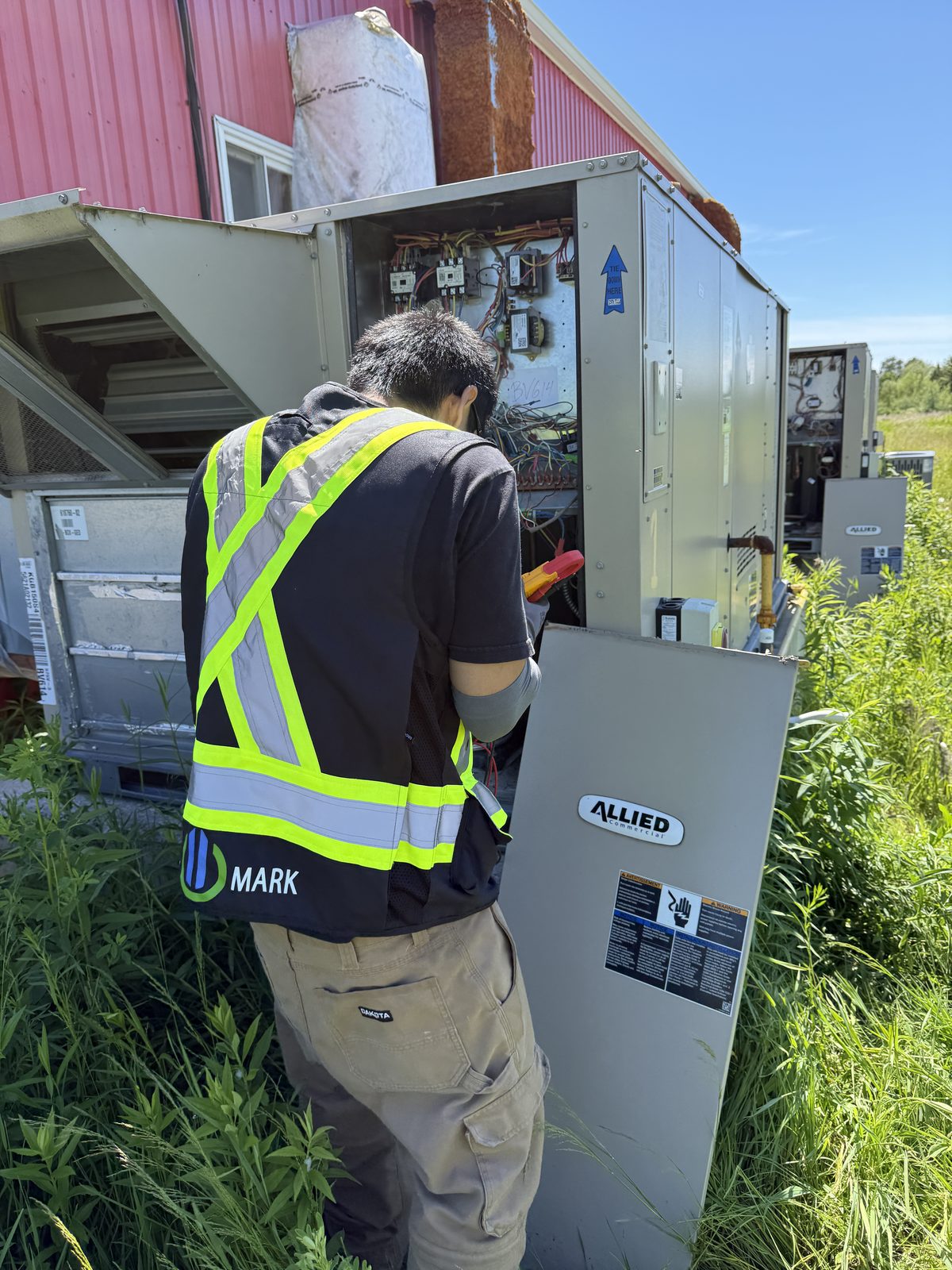
What our maintenance visit covers
- Filters, belts, bearings and the blower
- Condenser and evaporator coils, and the condensate drain
- Refrigerant pressures, superheat and subcooling against the manufacturer's chart
- The gas heat section: burners, ignition, flame sensing and venting
- Electrical: contactors, capacitors, terminations and amp draws under load
- Controls and the sequence of operation
- A written list of deficiencies, with priorities
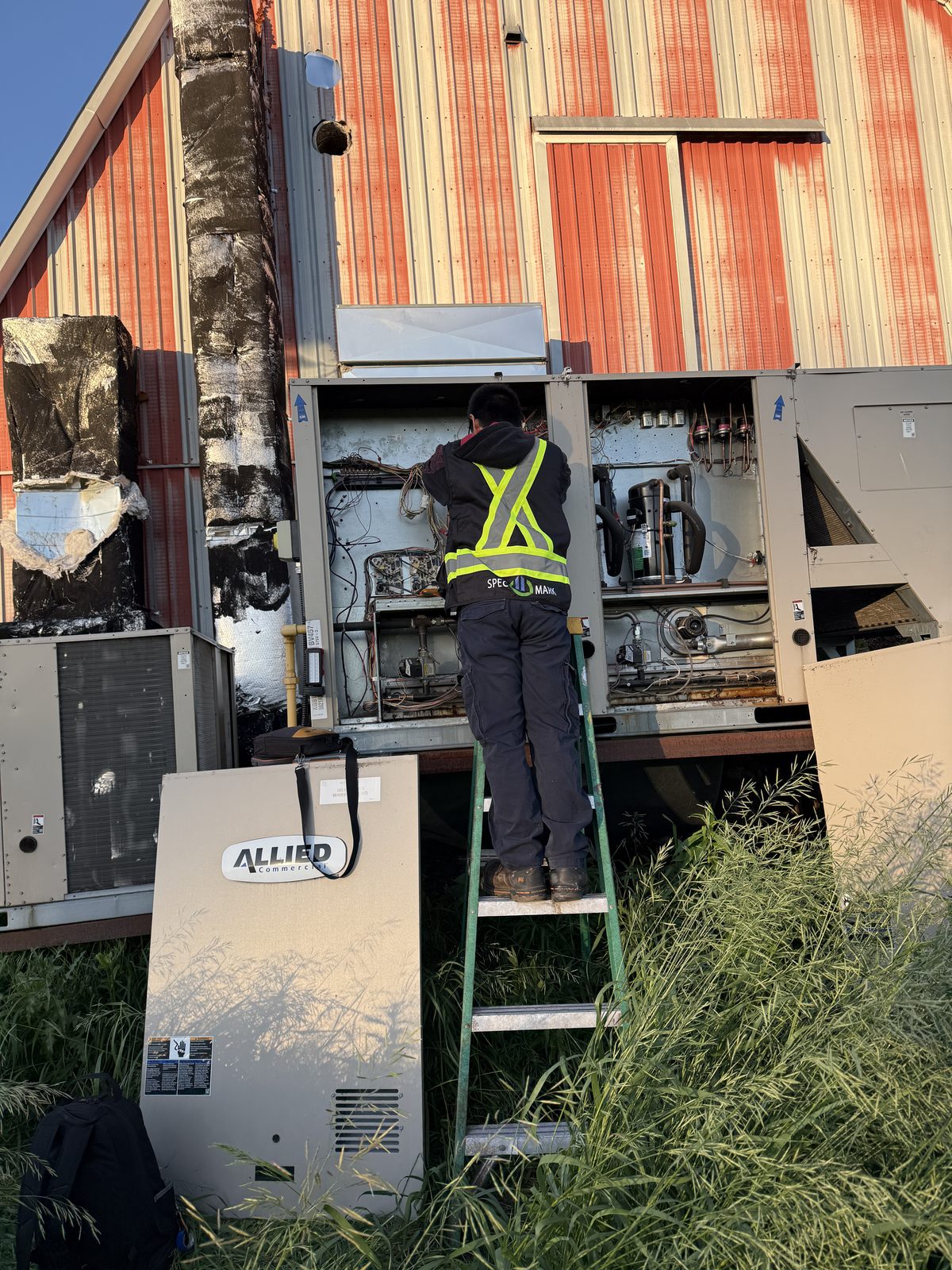
We do the coil and electrical checks with the panels off and take the refrigerant readings with the panels back in place.
The diagnostic
On the last day we diagnosed one unit's control circuit at the panel.
In our experience many early-summer faults are electrical:
- a failed capacitor
- a pitted contactor
- a loose termination heating up under load
- a safety that has opened
They are found with a meter at the panel.
Questions
How often should rooftop units be serviced?
We recommend two visits a year for commercial units: a cooling-season visit in spring and a heating-season visit in the fall, with filter changes between visits depending on the site.
What happens if you find a problem during a maintenance visit?
It is documented with photos and readings, and a separate repair scope follows. Routine maintenance and repairs are quoted separately, so the decision stays with you.