
Guide
Cross-connection surveys explained: what they are and how they differ from a test
A cross-connection survey inspects a property's water system to find where drinking water could meet a contaminant. In some programs it covers only the protection at the service entrance. The surveyor rates the hazard at each point found and records whether the protection in place matches it. A survey is not a backflow test, which checks a single device. Most GTA programs require both; Toronto asks for a survey by letter when it needs one.
What a cross-connection is
A cross-connection is an actual or potential connection between the potable water system and anything that could contaminate it: another system, a fixture, a piece of equipment or a substance. Cross-connections are common in commercial buildings. The by-laws allow them only where each one is protected against backflow. A restaurant, a manufacturing plant, a warehouse or a medical office has many legitimate connections between its water supply and the equipment it runs:
- boilers
- dispensers
- irrigation
- fire protection
- process lines
- hose connections
- tanks
The risk is what happens if water starts moving backward through one of them. That reversal is backflow, and it happens in two ways:
- Backsiphonage: the supply pressure drops below the pressure elsewhere in the system (a main break, heavy hydrant use) and draws water back.
- Backpressure: pressure downstream rises above the supply pressure (pumps, heating systems, pressurized equipment) and pushes water back.
Backflow preventers are designed to stop those reversals from reaching the drinking water. Before the right protection can be chosen, the hazards have to be found. Finding them is the job of the survey.
Survey versus test
| Cross-connection survey | Backflow test | |
|---|---|---|
| Looks at | The whole property's water system | One installed assembly |
| Answers | Where are the cross-connections? What hazard? What protection exists? Is anything bypassing it? | Do both checks hold, and does the relief valve open at the right point? |
| Frequency | Typically every 5 years, or on a change of use | Every year; in most programs also at installation and after a repair |
| Result | A survey report with corrective recommendations | A pass/fail test report and a tag |
A device can pass its annual test while the property still has a deficiency. A typical service runs in this order:
Municipal water → meter → backflow preventer → building
That arrangement isolates the building. Now add a branch:
Municipal water → meter → branch connection → backflow preventer → building
The branch leaves the service before the device, so it gets no protection from it. The device will still pass its test. The problem is the piping arrangement, which a survey looks for. Toronto's program specifically addresses unprotected branches and bypass piping around the meter for this reason.
What the surveyor looks at
Our survey does not interrupt the water supply. The surveyor needs access to every area with a water connection. The surveyor starts with the building's use and the incoming service, then follows the water through the facility. The report typically records:
- property and occupancy use, by tenant where relevant
- number and size of water services and the meter arrangement
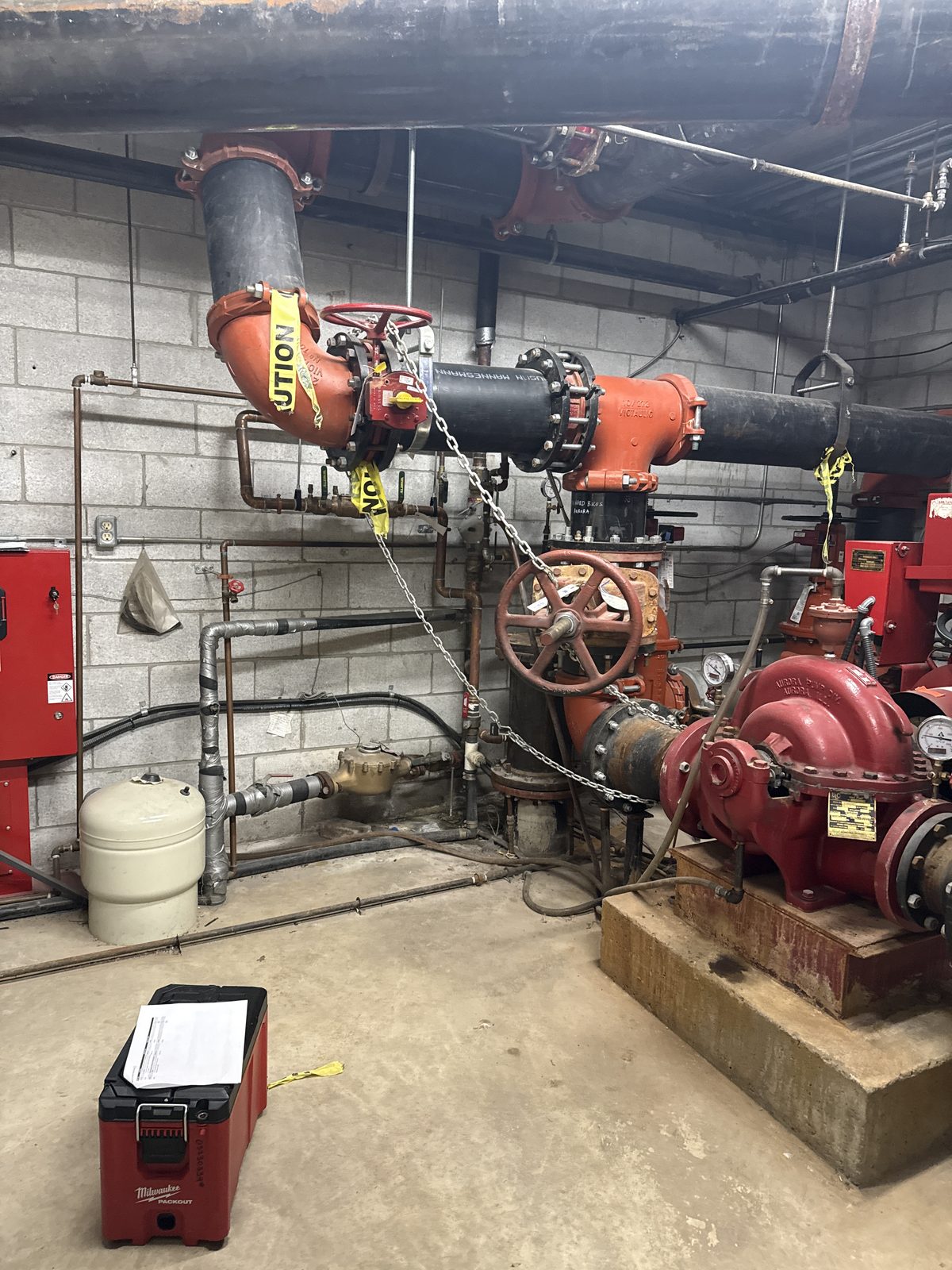
- existing backflow preventers: manufacturer, model, size, serial number and location
- equipment connected to the potable system
- existing or potential cross-connections and the degree of hazard of each
- unprotected piping, branches or bypasses
- the corrective work recommended
Two buildings with identical services can need very different protection, depending on what happens inside them. A warehouse that takes on a food tenant has a higher hazard even if the plumbing has not changed.
Premise isolation and individual protection
Premise isolation protects the municipal system from the property: one assembly on the incoming service. Individual protection sits closer to a specific hazard to protect the building's own water from it. Toronto and Durham survey premise isolation only. Hamilton's survey lists every cross-connection, but the City rules only on premise isolation. Markham, Richmond Hill and Peel cover both. In those programs the survey tells you which of the two, or both, the property needs and whether what is installed matches.
How the GTA municipalities use surveys
- Toronto requests a cross-connection survey, which it calls a backflow prevention survey, when it needs to confirm protection. The report must be updated at least every 5 years, or within 30 days of an increase in hazard.
- Richmond Hill starts its program with a survey. On receiving the City's notice, the owner retains a qualified contractor to survey the site. The Cross Connection Control Survey Report is due by the date on the notice. Existing devices are tested at the same time.
- Markham requires a survey every 5 years or when the use of the property changes. Devices are tested separately, at installation and annually.
- Vaughan issues a Cross Connection Control Survey Requirement notice with a completion timeline. It requires a new survey every 5 years from the first.
- Aurora requires a Cross Connection Control Survey by a qualified contractor, submitted through the Town's online survey form. It is repeated within 30 days of its fifth anniversary, and after a new connection or a change of use or ownership.
- Durham requires the survey within 90 days of the notice, submitted through Backflow Solutions Inc. (BSI). It is repeated every 5 years or on a change of ownership, zoning, use or chemical use.
- Peel requires the survey within 60 days of its notice. It is repeated every 3 years where a severe hazard is present and every 5 years where the hazard is moderate or minor.
- Halton Region requires a requested survey within 60 days. Survey and test reports are filed within 28 days.
- Hamilton has the owner complete a free Self-Assessed Survey for a water service of 38 mm or smaller. A larger service needs a Cross Connection Survey by a contractor registered with the City. The by-law's threshold is above 38 mm; the City's program page says 50 mm or larger. Both are repeated every 5 years, and a new survey is due within 30 days of a change in the hazard level, the ownership or the equipment.
When the survey finds something
A deficiency does not mean the existing equipment is scrapped. The fix ranges from protecting one connection to replacing a device with one rated for the hazard; the question below lists the options.
The report says which.
Why it matters to a property manager
The survey is a documented account of how water is used in the building and how the municipal supply is protected. It is what you hand to a municipal inspector, and in our experience to a new tenant's insurer or a purchaser's lawyer. Repeated every 5 years, it finds plumbing changes that have left a connection unprotected.
Questions
My backflow preventer passed its annual test. Do I still need a survey?
Yes, if the municipality requires one. The annual test only confirms the device it was performed on. It does not establish that every cross-connection in the property has been identified or that the piping around the device provides the protection intended.
What information does the surveyor need from me?
The surveyor needs:
- access to the mechanical and meter rooms and to any process areas;
- the building's use, by tenant;
- drawings, if you have them;
- any previous survey or test reports.
Photos of existing devices and tags help us prepare.
What happens if the survey finds a deficiency?
The report says what the deficiency is and what corrects it. The fix may be:
- protection on an unprotected connection;
- a bypass corrected;
- piping reconfigured;
- a device relocated;
- a device replaced with one rated for the hazard.
The survey identifies the condition before any work is done.
Sources
- City of Toronto, Backflow Prevention Program (survey requirements)
- City of Richmond Hill, Backflow Prevention
- City of Markham, Backflow Prevention Program FAQ
- Region of Durham, Backflow Prevention Program
- Region of Peel, Backflow prevention and cross connection surveys
- Halton Region, Cross-Connection Control Program
- City of Hamilton, Backflow Prevention Program
- Town of Aurora, Backflow Prevention Program
- City of Vaughan, Backflow Prevention Program