
Guide
GPR scanning before we cut or dig for a backflow installation
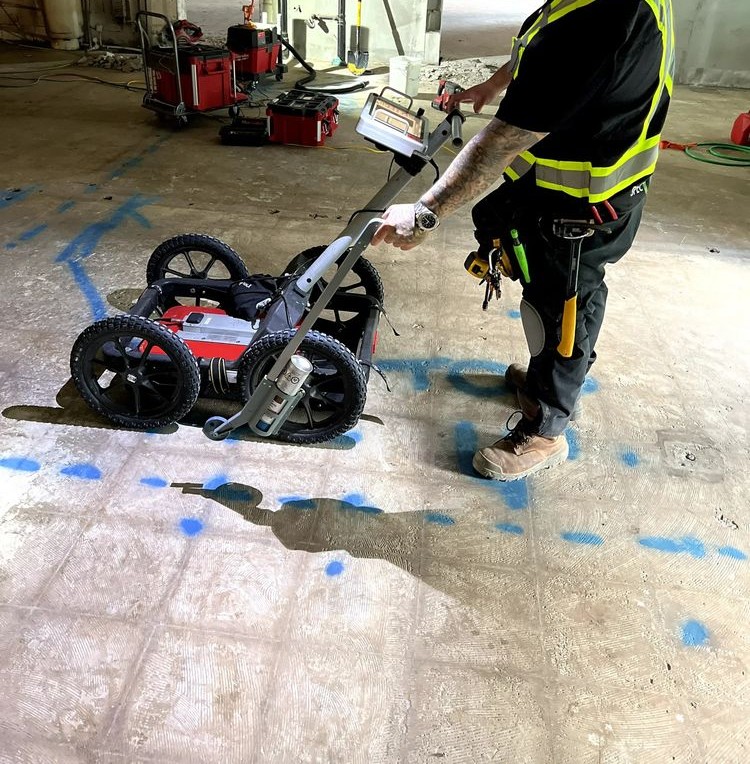
Before coring a slab or excavating to install or relocate a backflow preventer, we scan the area with ground-penetrating radar to locate buried pipes, conduits and rebar. In our experience, it reduces the risk of striking a service that is not on the drawings, without damaging the slab.
Why we scan first
A premise-isolation backflow preventer has to go on the incoming service immediately after the meter. In our experience, in older buildings that often means cutting into a slab or excavating outside the wall. In our experience the drawings, if they exist, rarely show everything buried since. Ground-penetrating radar (GPR) helps us locate what is below the surface before we cut or dig.
What it changes on the job
- Buried services marked first. Electrical conduits, other water and gas services and post-tension cables are marked before anyone cuts.
- A better location for the device. We can position the device and its drain where the slab is clear, rather than where the drawing placed it.
- A record. The marked-out scan becomes part of the job file for the next contractor.
GPR is a locating tool. It does not test the device. It does not replace the locate request through Ontario Dig Authority (formerly Ontario One Call) that the law requires before any digging outside the building.