
Field noteHeating & Cooling
Fourteen rooftop heat pumps, from delivery to the finished rows
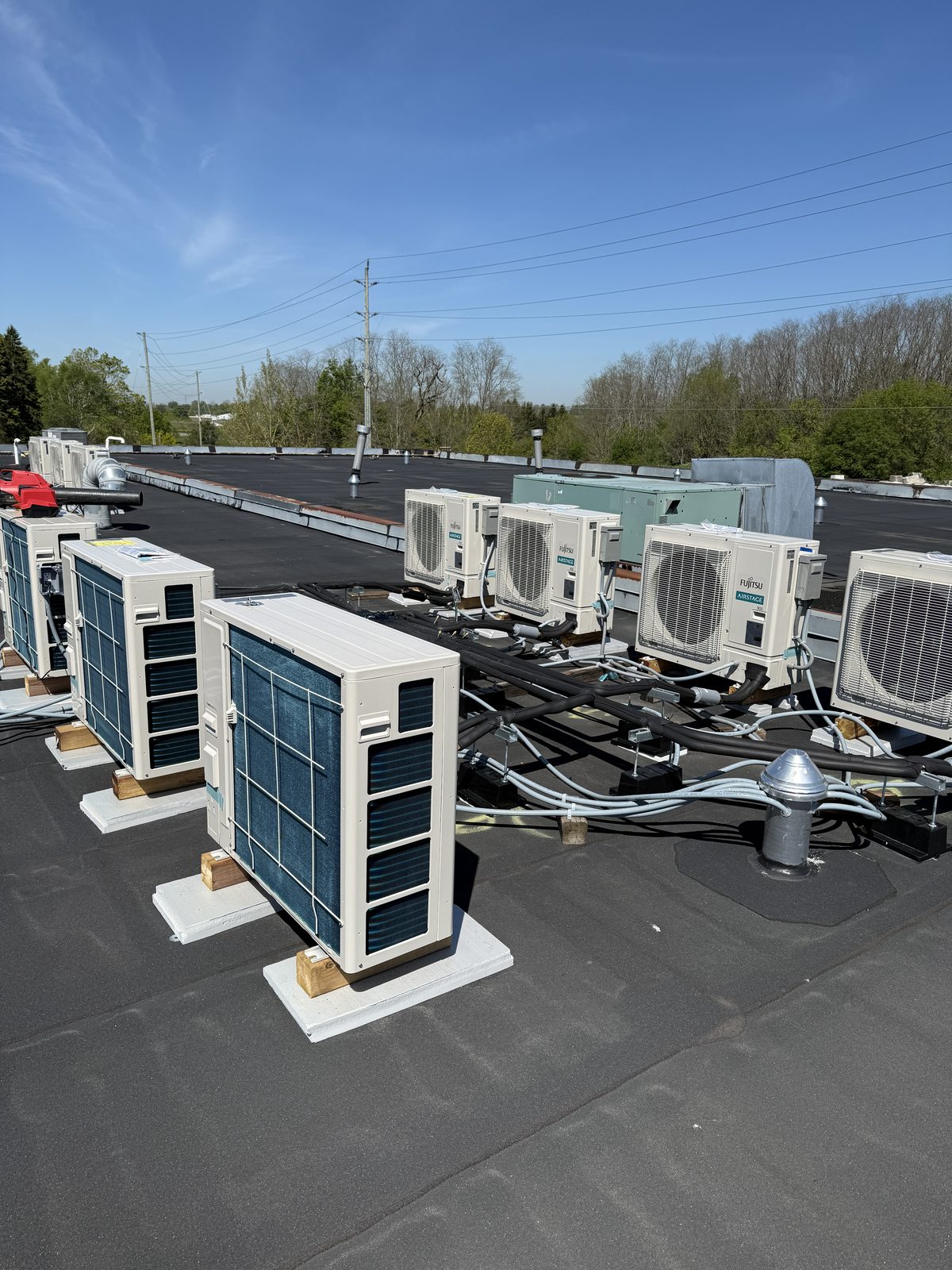
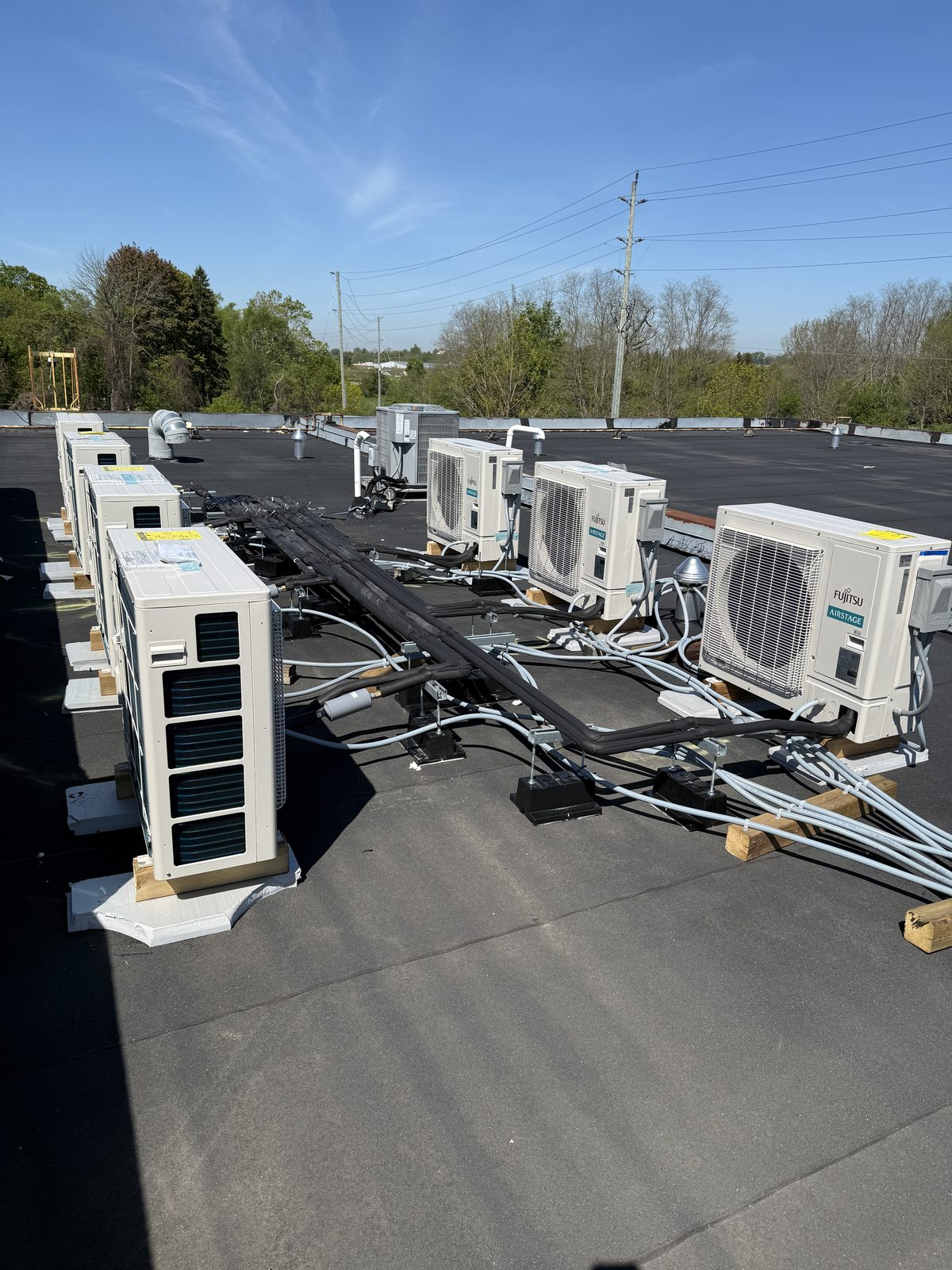
Fourteen heat pump condensing units were installed on one flat roof. They were delivered and staged on the roof in November and set on stands in the spring. They were piped with insulated line sets to where the lines enter the building. The rows were complete by late May.
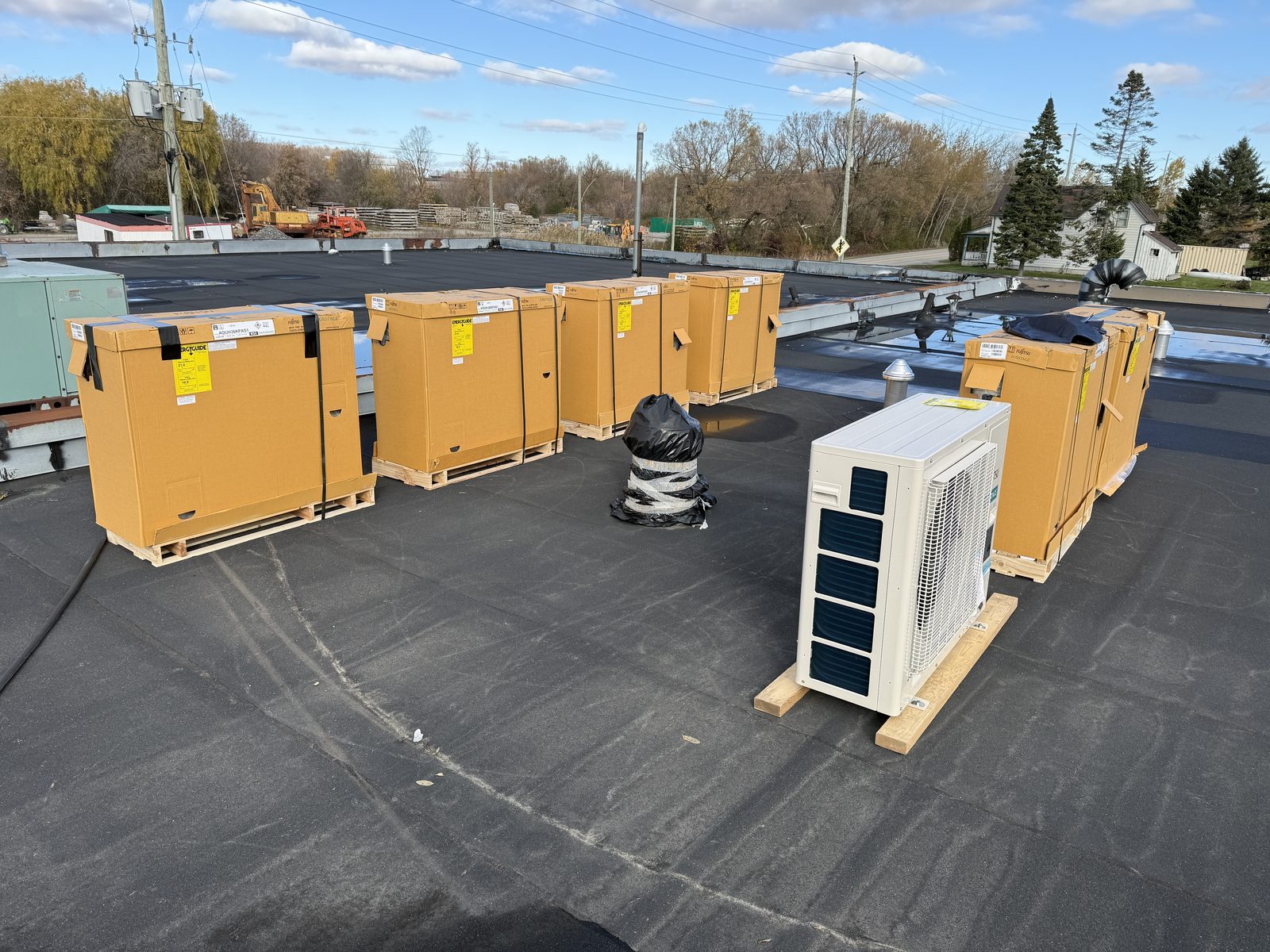
Delivery and staging
The units arrived crated and were placed on the roof in November. They were spread along the line where they would be mounted, so nothing had to be moved twice.
Setting the units
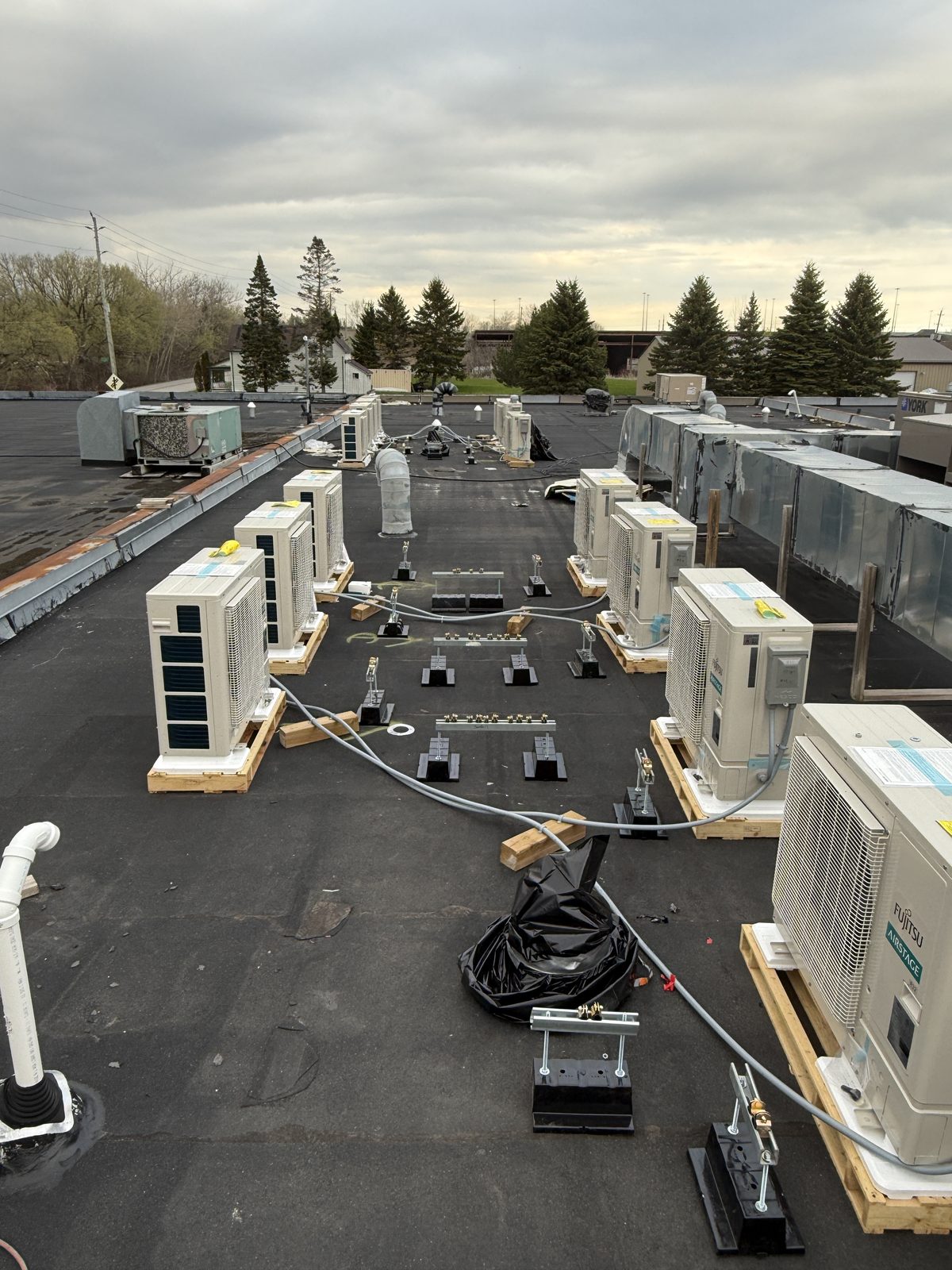
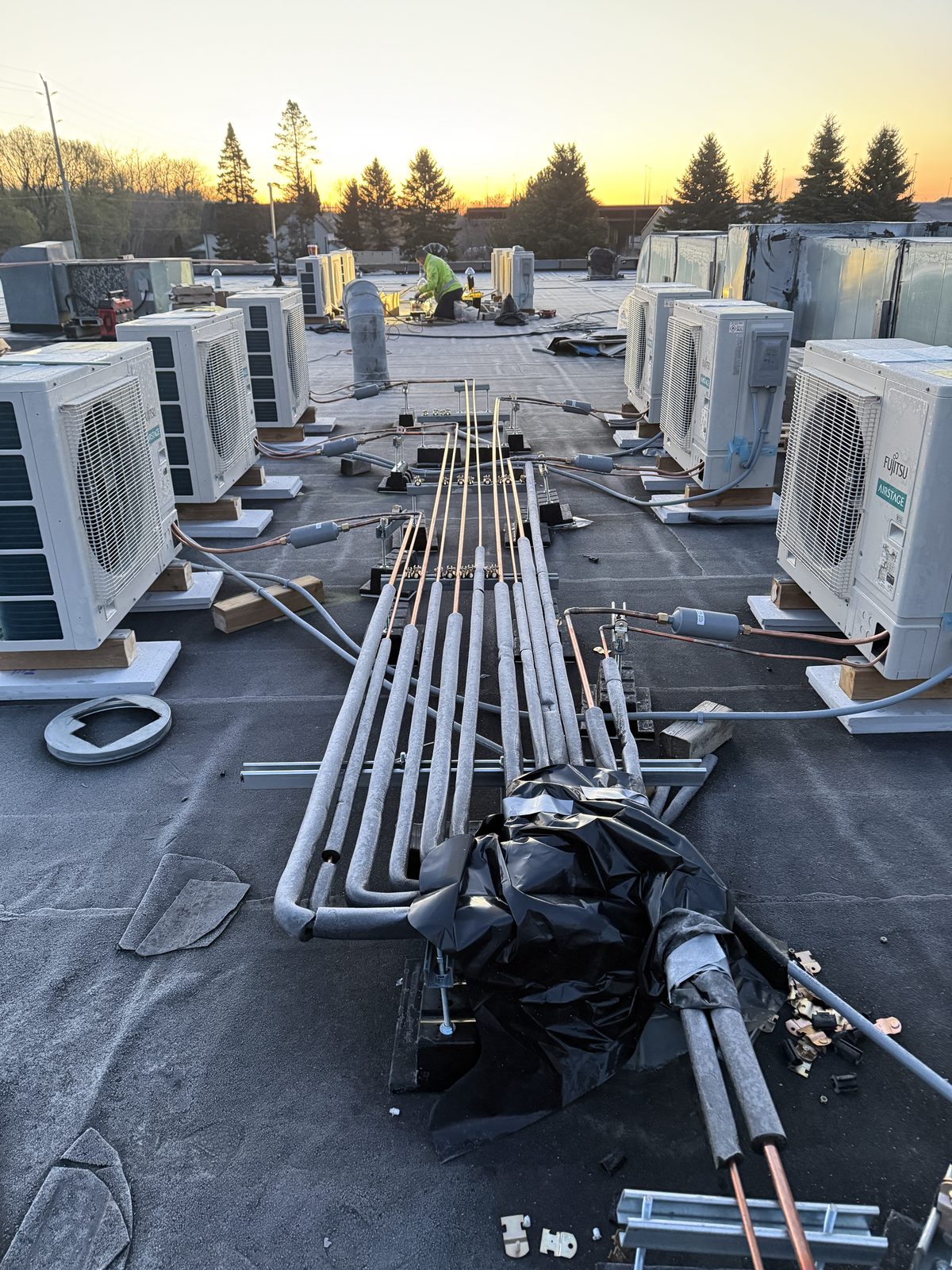
Each unit sits on a stand over a pad, so the membrane under it is untouched and water can run beneath. The stands are set in two rows with a walkway between them, which keeps every unit reachable for service without stepping over another unit's piping.
Line sets
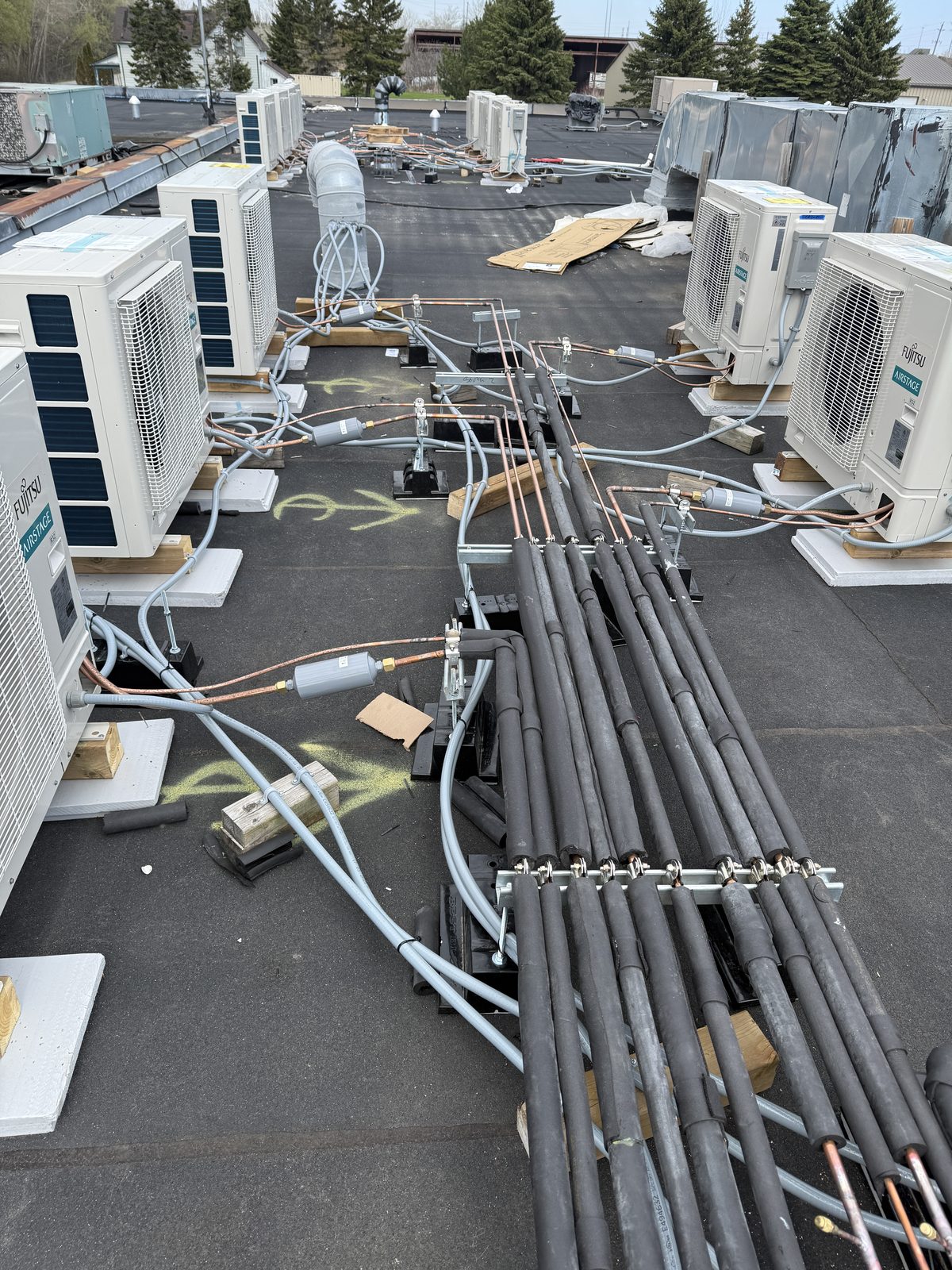
The refrigerant lines from each unit run in insulated copper, supported on rails above the roof. They are grouped where they enter the building. The lines are kept off the membrane: in our experience a line set lying on a hot roof loses its insulation and chafes through.
What the job involved
- A crane day. Units of this size come up by crane, which in our experience means a lift plan, a dry day and usually part of the lot closed off.
- Staging space. Crates sit on the roof until each unit is set, so the roof needs protected space for them.
- Roof protection. Stands, pads and rails are there to protect the membrane. We ask the owner to have the roofer review the layout before anything is fixed down.
- Electrical coordination. The electrical contractor provides a feed and a disconnect for each unit. The electrical contractor's schedule sets the timing as much as ours does.
- Start-up. On this job each line set was pressure-tested with nitrogen and evacuated, and the charge was checked against the manufacturer's specification. The readings went into a commissioning report for the building.
Questions
Why are the units raised on stands instead of sitting on the roof?
We raise the units on stands so the roof membrane stays undisturbed, meltwater and snow can pass underneath, and the coil sits above drifting snow. In our experience stands also leave room to run line sets and condensate drains below the units.
How long does a multi-unit rooftop installation take?
In our experience it depends on crane access, the length of the line-set runs and the electrical work. Here the units were placed on the roof in November and the rows were complete in late May.