
Backflow preventionCity of Richmond Hill, By-law 125-14
Backflow preventer testing and installation in Richmond Hill
Spec-Mark Group surveys properties and tests, installs and repairs backflow preventers for industrial, commercial and institutional properties in Richmond Hill. York Region supplies the water. The City runs the backflow program under its Backflow Prevention and Cross Connection Control By-law 125-14, and its Building Division issues the permit for a new device. Send us the City's notice and we confirm the next step.
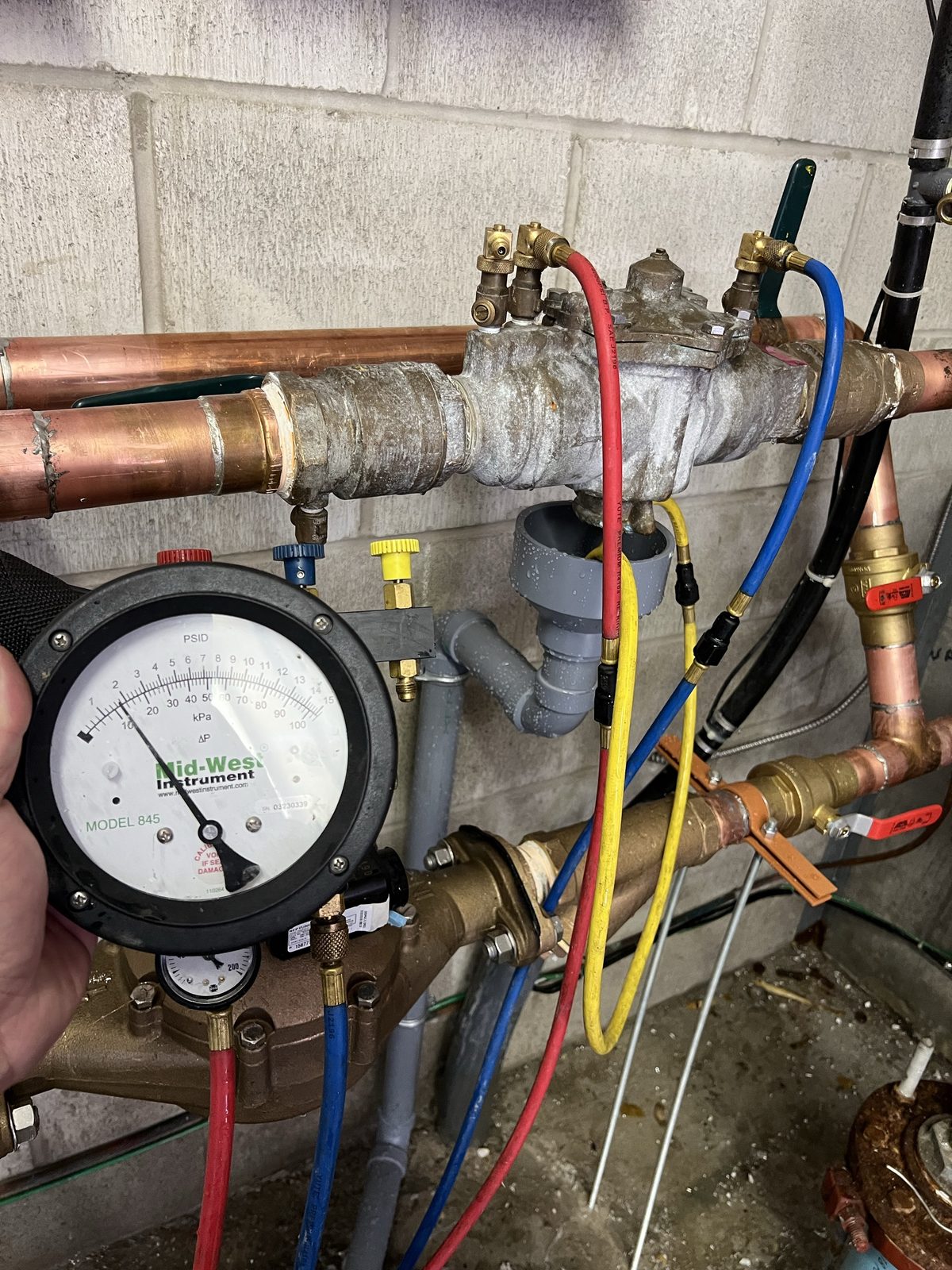
Who has to comply in Richmond Hill
Richmond Hill's Backflow Prevention and Cross Connection Control By-law 125-14 was passed on September 22, 2014. The City's program covers industrial, commercial and institutional properties. The City's page says the program does not apply to residential properties. If a residential property receives a notice, send it to us and we confirm the next step.
The Ontario Building Code's plumbing part (Part 7) and the CSA B64 standards also apply. The municipal by-law adds the program around them: who is surveyed, how often each device is tested, where the report goes and by when.
The two phases
The program runs in two phases after the City's notice:
- Phase one. Hire a qualified contractor and have a cross-connection survey done. Complete the Cross Connection Control Survey Report by the date on the notice, and have any existing devices tested. The survey report is emailed to [email protected]. Test reports are submitted through the online test report form within 14 days of the test.
- Phase two. The City then tells you what, if anything, is needed. Where the survey identifies a hazard, the by-law gives 30 calendar days to install a device for a severe hazard and 90 days for a moderate or minor hazard. Once installed, the device is tested and the result submitted through the online test report form.
The $74 plus HST compliance processing fee is paid for each premise device. Once the report is approved and the fee paid, the City generates a digital tag or certificate, which must be affixed on or near the device. After that, the Building Division is contacted for a final inspection. The device is retested every year after, and after any cleaning, repair, overhaul or relocation. A new survey is required every 5 years or on a change of use, zoning, owner or tenant.
A permit for a new device in Richmond Hill
A new device needs a building permit from the City's Building Division, applied for online through the City's permit portal against the City's Backflow Checklist. The checklist asks for the provincial forms, the survey by an approved backflow surveyor and a floor plan showing the meter, each device and each expansion tank. It also asks for the expansion tank sizing and a schematic for each device. A device of 2 inches or larger, or any device in a Part 3 building, needs engineered drawings. A device in a Part 9 building needs a designer with a BCIN. Under By-law 19-24 the 2026 fee schedule sets a $158.40 minimum plumbing permit fee. It adds a line for each device by size, from $15.02 (1 inch or less) to $62.78 (4 inches), and the Building Division confirms how the two combine.
Who can test
A tester in Richmond Hill must hold:
- an OWWA (or equivalent) certificate, which expires 5 years after issue;
- a valid calibration certificate for the test equipment;
- either a 306A plumber's certificate of qualification or professional engineering, technologist or sprinkler-fitter credentials;
- the company's plumbing contractor licence, from any Ontario municipality;
- liability insurance valid at least 6 months past the application date.
The City's Backflow Prevention page publishes no list of accepted testers; it sets out the qualifications a tester must hold.
Working with us in Richmond Hill
Richmond Hill sets its own tester requirements, listed under Who can test. Send us the notice and we confirm the next step. Our certificates are listed on the Qualifications page. The other York Region programs are compared on the York Region page.
Questions about backflow in Richmond Hill
Is a backflow preventer required for my property in Richmond Hill?
The City's program covers industrial, commercial and institutional properties, and the City's page says it does not apply to residential properties. The City's notice starts the process: a cross-connection survey is due by the date on the notice, and a device follows where the survey finds a hazard.
How often is it tested in Richmond Hill, and when is it replaced?
Every device is tested at installation, every year after, and when it is cleaned, repaired, overhauled or relocated, with the report filed online within 14 days. There is no fixed replacement age; a malfunctioning device must be repaired or replaced without delay (By-law 125-14, section 14(a)(iii)).
What does backflow compliance cost in Richmond Hill?
The City charges a $74 plus HST backflow prevention compliance processing fee for each premise device. The digital tag is generated once the report is approved and the fee is paid. A new installation also needs a building permit from the Building Division. The 2026 fee schedule sets a $158.40 minimum plumbing permit fee. It lists backflow preventers from $15.02 for 1 inch or less to $62.78 for 4 inches. The Building Division confirms the total. Where we file the report, we pay the City's fee on your behalf and pass the digital tag on to you. We quote from the notice and the number, size and type of devices.
Is a backwater valve the same as a backflow preventer?
No. A backwater valve is a sewer device that helps protect a basement from sewage backup. A backflow preventer protects the drinking water supply, and it is what the City's notice is about.
Who sends the notice in Richmond Hill, and who issues the permit?
The City of Richmond Hill runs the backflow program and sends the notice; York Region supplies the water. The survey report goes by email to [email protected], and test reports through the City's online form. A new device needs a building permit from the City's Building Division, which also inspects the installation.