
Field noteHeating & Cooling
Service calls on low-temperature refrigeration: a frozen coil, flood-back and a leak
Three service calls on low-temperature refrigeration, grouped by what the technicians photographed: an evaporator coil iced over with damaged fins, frost on a suction accumulator on a flood-back call, and a leak search with an electronic detector. Each photo is explained in general terms; the findings on each call will be added when supplied.
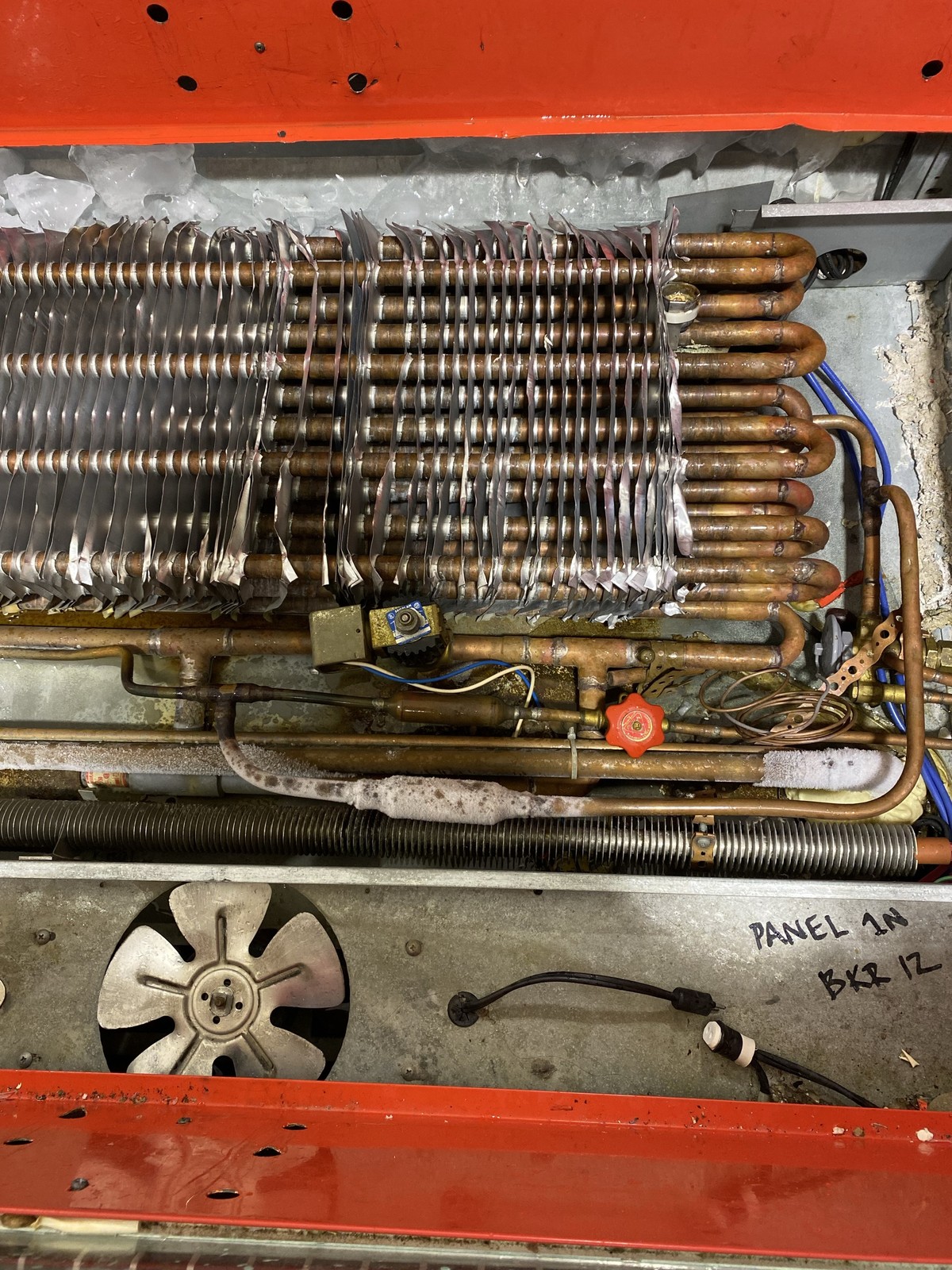
The frozen coil
The photo shows ice along the top of the coil and fins bent flat over part of its face, which blocks airflow through those rows. Bent fins are straightened with a fin comb where the damage allows; a coil damaged beyond that is replaced.
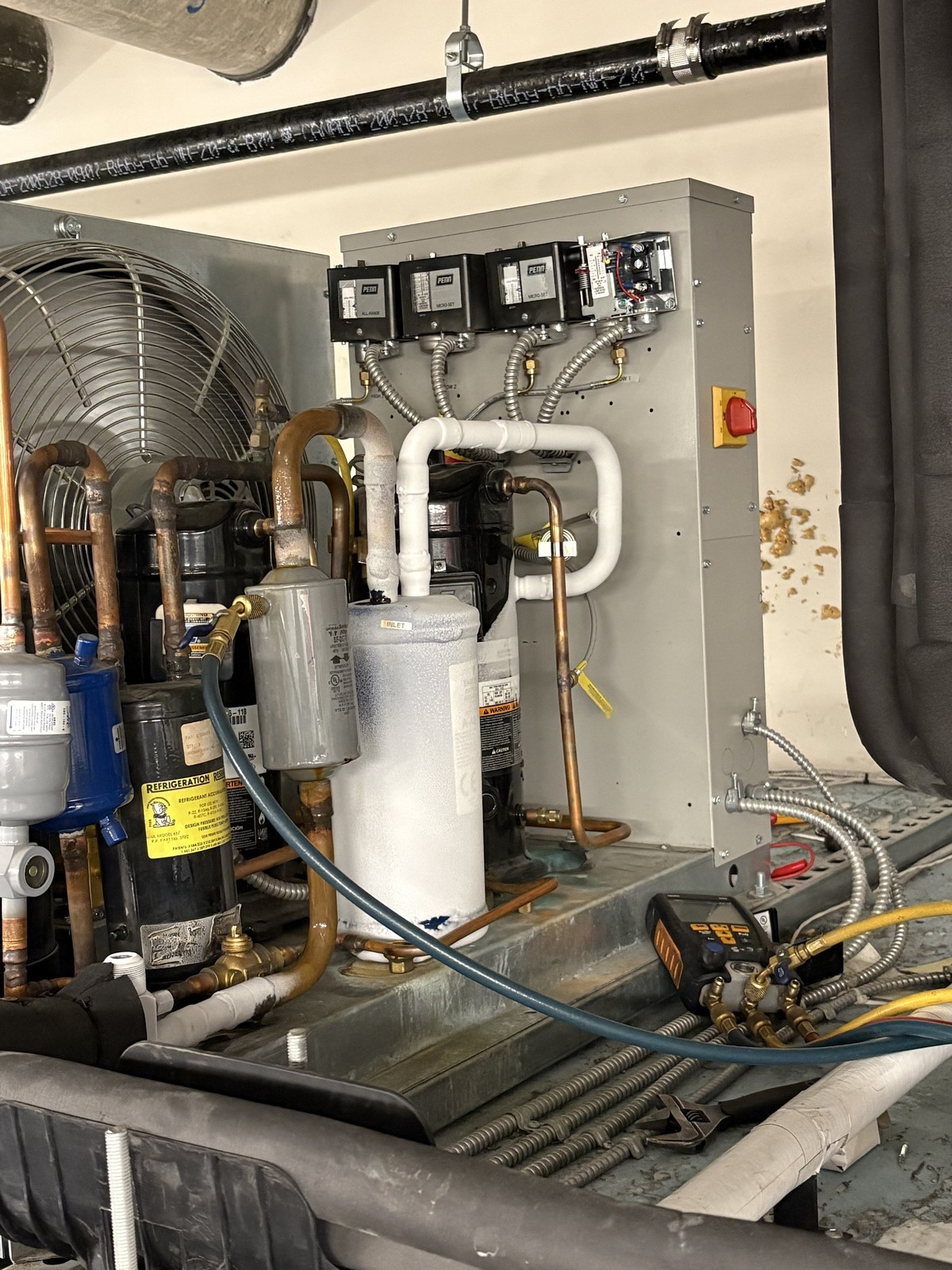
The flood-back call
Flood-back is liquid refrigerant returning to the compressor instead of vapour. From outside, the sign is frost or sweat on the suction line and the accumulator, as in the photo of the condensing unit. The gauges are connected for the readings. Running with liquid returning damages the compressor, so the cause is found before the unit is left in service.
The leak
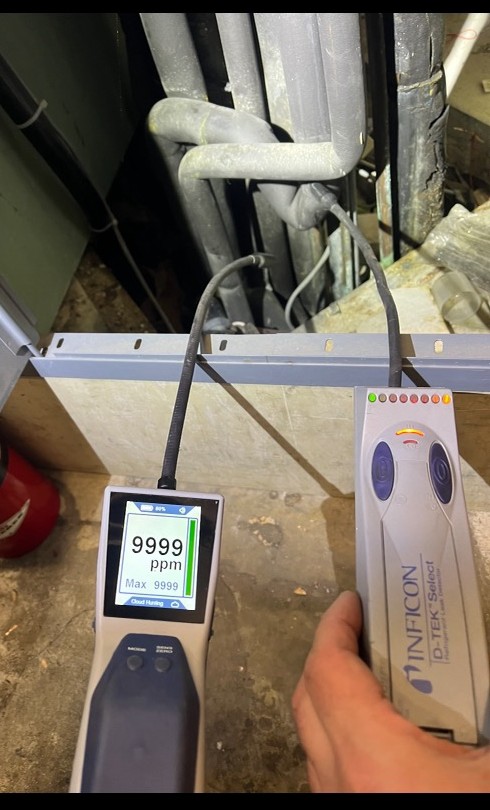
A refrigerant leak on a low-temperature unit is found with an electronic detector moved along the lines and joints. The photo shows the detector at the insulated line set, reading at the top of its scale beside the leak.
Questions
Why does an evaporator coil ice over?
The coil runs below freezing, so moisture from the air freezes on it in normal operation and is removed on a defrost cycle. Ice builds faster than it is removed when defrost fails, when airflow drops because of a fan fault or a blocked coil, when the charge is low, or when a door stays open. The coil then stops moving air and the space warms. The repair depends on which of these it was.